
A Strategic Pivot With Far-Reaching Consequences for Indo-Pacific Security
President Donald Trump’s announcement on Sunday, August 16, 2026, that the United States would scale back the annual Ulchi Freedom Shield military exercises with South Korea has drawn sharp criticism from defence analysts, opposition lawmakers, and even members of his own Republican Party. The decision, delivered hours before the 11-day drills were scheduled to begin on Monday, underscores a deepening pattern of the Trump administration prioritising personal diplomacy with adversarial leaders over institutionalised alliances with long-standing partners.
The Announcement: Trump Cites Kim Jong Un’s “Respectful” Conduct as Justification
Trump directed the Pentagon to reduce what he described as “inappropriate and hostile” yearly military exercises with South Korea — a close US treaty ally. In his public remarks, Trump cited his “good relationship” with North Korean leader Kim Jong Un, stating that Kim had always been “unthreatening and respectful” toward him personally, and characterising the drills as both “costly” and unnecessary given that diplomatic posture.
The announcement marked Trump’s latest move to reshape US defence commitments around personal relationships rather than strategic doctrine. It is not the first time Trump has intervened in the exercises. After his inaugural summit with Kim in Singapore in June 2018, Trump suspended the Ulchi Freedom Shield’s predecessor drills altogether to facilitate denuclearisation negotiations — talks that ultimately produced no verifiable agreement.
Trump also used the announcement to criticise South Korea directly, stating that Seoul had refused his offer to participate in what he termed the “denuclearisation” of Iran — a framing that drew puzzled responses from foreign policy observers given Iran’s geographically and strategically distinct threat profile.
The Strategic Vacuum: A Carrier Departure and China’s Opportunity
The timing of Trump’s drill-reduction announcement carries particular weight given simultaneous developments in US force posture across the Pacific. The USS George Washington aircraft carrier is currently being redeployed from the Pacific to the Middle East in support of the ongoing US-Israel war against Iran, which began in late February 2026. That redeployment means the Indo-Pacific region will operate without a US carrier presence — at least temporarily — a development that defence analysts describe as a strategic boon for an increasingly assertive China.
Richard Haass, former president of the Council on Foreign Relations, wrote on X: “The US has long sought to pivot to Asia. Now we are seeing a pivot from Asia as forces depart, munitions grow short, and this POTUS chooses totalitarian foes over allies.”
Senator Jack Reed, the ranking Democrat on the Senate Armed Services Committee, was equally blunt. “China and Russia are watching how easily this President abandons America’s allies,” Reed stated, “and they will remember it the next time they test us.”
Republican Discomfort and the “Model Ally” Contradiction
Trump’s move triggered disquiet even within his own party. Richard Fontaine, head of the Centre for a New American Security, pointed to the contradiction between the administration’s recent praise of South Korea as a “model ally” and its abrupt decision to scale back a cornerstone of the bilateral defence relationship.
“A little more consistency would go a long way,” Fontaine wrote on X. “On Korea, for example: the South is our ally, the North is not. Clarifying that would make a good start.”
Victor Cha, Korea chair at the Centre for Strategic and International Studies, assessed that Trump’s scaling back of the joint military exercises is the latest signal of his desire to secure another summit with Kim Jong Un. However, Cha cautioned that Kim may be deliberately withholding engagement until after the US midterm elections in November 2026, calculating that greater leverage can be extracted from a politically constrained Trump administration.
Cha also raised two additional strategic interpretations of the decision. First, Trump may be attempting to draw Kim away from Russia’s orbit — North Korea has supplied both troops and weapons to support Moscow’s war in Ukraine, and since that conflict began, Russia has significantly deepened its ties with both Beijing and Pyongyang. Second, the drill reduction may serve as a domestic political distraction from the unpopular and unresolved US war in Iran.
Seoul’s Measured Response and the Broader Alliance Calculus
South Korea responded to Trump’s announcement in notably restrained terms, expressing hope that the relationship between Trump and Kim “will lead to meaningful dialogue.” The diplomatic caution in Seoul’s language reflects both the asymmetry of the alliance and the South’s interest in not publicly antagonising Washington while North Korea remains an active military threat.
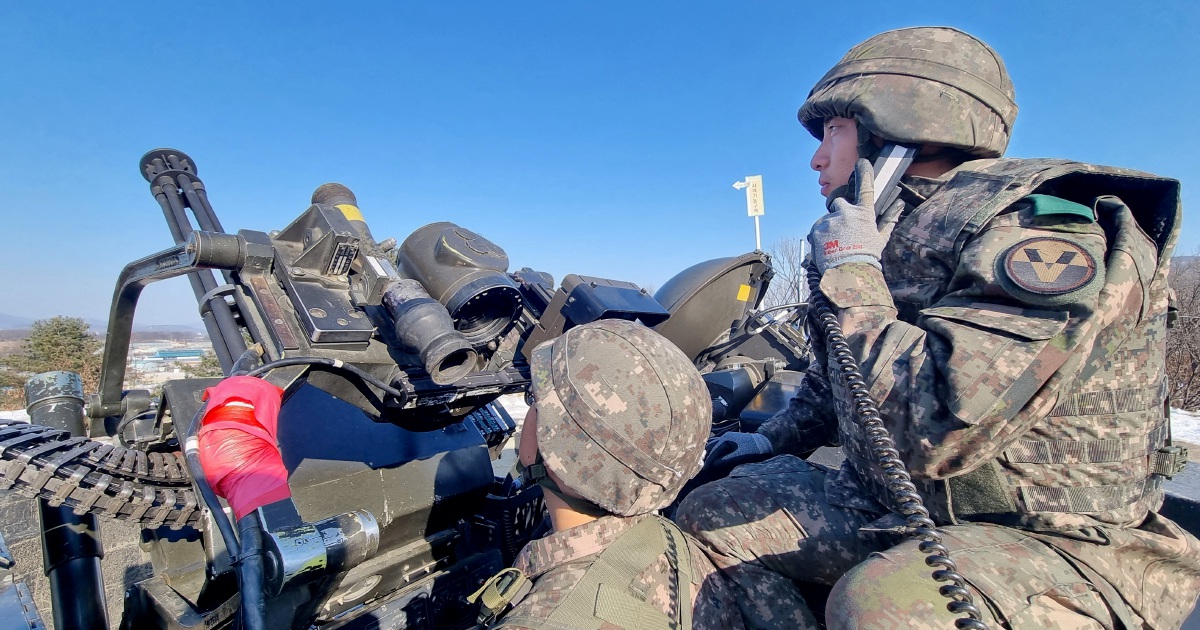
The Ulchi Freedom Shield exercises are specifically designed to prepare combined US and South Korean forces for the prospect of armed conflict with nuclear-armed North Korea. Scaling them back, even partially, degrades readiness in ways that North Korea — which routinely denounces the drills as rehearsals for invasion — will register as a concrete concession extracted without reciprocal action.
Trump’s recently published national security strategy, which carries the “America First” framework, reaffirmed calls for a “free and open” Asia-Pacific region as a counterweight to China, and explicitly called on both Japan and South Korea to increase defence spending and do more to support self-ruling Taiwan. The contradiction between that stated strategic posture and the simultaneous reduction of the very exercises meant to operationalise it has not gone unaddressed by analysts.
What You Need to Know: Key Questions on Trump’s Korea Drill Decision
What exactly did Trump announce regarding US-South Korea military drills? Trump announced on Sunday, August 16, 2026, that he had directed the Pentagon to scale back the annual Ulchi Freedom Shield joint military exercises with South Korea, describing them as “inappropriate and hostile.” The announcement came hours before the 11-day drills were scheduled to begin on Monday, August 17, 2026.
What are the Ulchi Freedom Shield exercises? The Ulchi Freedom Shield is an 11-day joint military exercise conducted annually between US and South Korean forces. The drills are specifically designed to maintain combined readiness for a potential armed conflict with nuclear-armed North Korea.
Has Trump made this kind of intervention before? Yes. After his first summit with North Korean leader Kim Jong Un in Singapore in 2018, Trump suspended the exercises entirely to support what ultimately proved to be unsuccessful denuclearisation negotiations with Pyongyang.
Why did Trump give for scaling back the drills? Trump stated that the exercises were “costly” and unnecessary because Kim Jong Un had been “unthreatening and respectful” toward him. He also cited his “good relationship” with Kim as justification and criticised South Korea for declining to join what he characterised as an effort to denuclearise Iran.
What are the strategic implications for the Indo-Pacific region? The USS George Washington aircraft carrier is simultaneously being redeployed from the Pacific to the Middle East to support the Iran war. This leaves the Indo-Pacific without a US carrier presence, which analysts describe as benefiting an increasingly assertive China. Critics argue the combined developments signal a US disengagement from Asia.
How have US allies and analysts responded to the announcement? Responses have ranged from alarm to sharp criticism. Former Council on Foreign Relations president Richard Haass described it as a “pivot from Asia.” Senate Armed Services Committee ranking Democrat Jack Reed warned that China and Russia are observing how readily the administration abandons allies. Victor Cha of CSIS assessed it as a signal of Trump’s intent to pursue another summit with Kim. Richard Fontaine of CNAS called for greater consistency, noting South Korea had recently been praised as a “model ally.”
Could this decision be connected to the US war in Iran? Victor Cha of the Centre for Strategic and International Studies stated that Trump’s Korea drill decision may partially be aimed at shifting domestic political attention away from the unpopular and unresolved US-Israel war against Iran, which began in late February 2026.
What is North Korea’s likely calculation in response to the announcement? According to Victor Cha, Kim Jong Un may deliberately delay re-engagement with Trump until after the US midterm elections in November 2026, seeking to extract greater concessions from a politically constrained administration. North Korea routinely condemns the joint exercises as rehearsals for invasion and will register their reduction as a unilateral US concession.