
The international community has watched with growing alarm as reports of violations at Jerusalem’s holy sites accumulate without a unified, systematic response. For Muslim-majority nations, observers of international law, and advocates of Palestinian self-determination, the absence of a sustained, coordinated documentation mechanism has long represented a critical gap — one that allows violations to be repeated, normalised, and eventually overlooked. At the 81st session of the United Nations General Assembly (UNGA) in New York, Malaysia’s position on Israeli violations at Jerusalem holy sites moved from the margins to the centre of multilateral debate.
A Notable Diplomatic Signal: Malaysia Advances a Structural Proposal at the UN
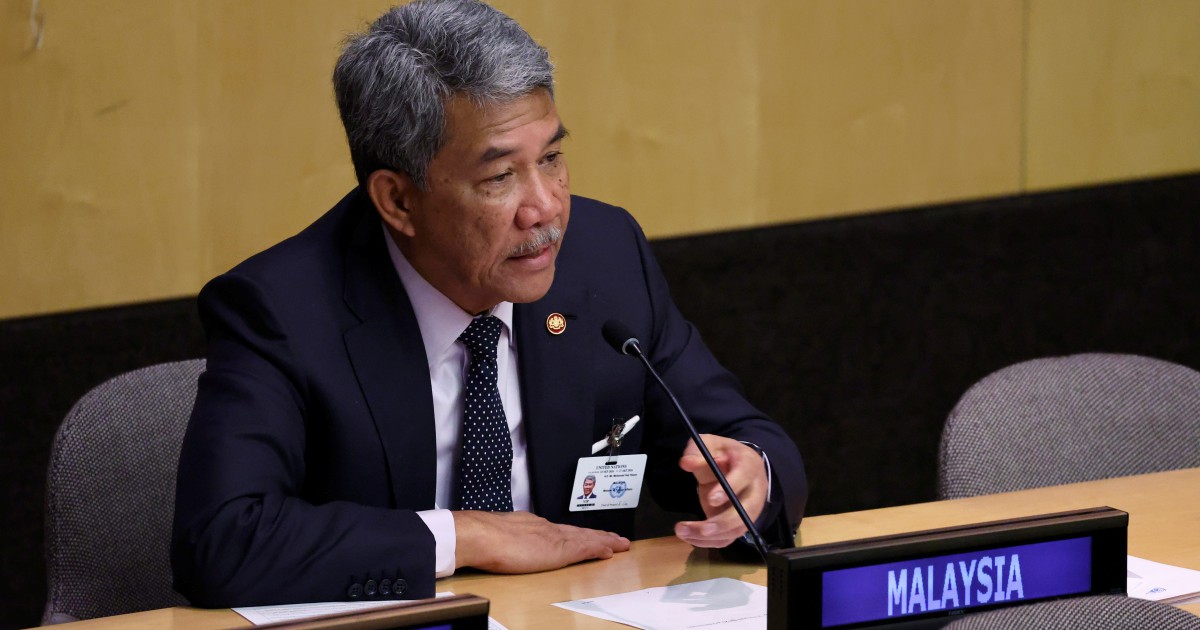
Observers tracking Malaysia’s foreign policy trajectory have noted a deliberate shift from declaratory condemnation toward concrete institutional proposals. At the Joint Ministerial Meeting between the League of Arab States and the Organisation of Islamic Cooperation (OIC) on Jerusalem — held at the United Nations headquarters in New York on September 26, 2026 — Foreign Minister Datuk Seri Mohamad Hasan put forward a proposal that reflects a broader structural shift in how Muslim-majority states are approaching the Jerusalem question.
Mohamad stated that Malaysia supports a sustainable mechanism, including a dedicated media platform, to document and expose Israeli violations against holy sites and worshippers in Jerusalem. The proposal moves beyond standard diplomatic language and signals an intent to build lasting institutional infrastructure for accountability. Public statements from the ministerial session confirm that Malaysia’s intervention was framed not merely as protest, but as a call to operationalise collective resolve.
The Scale of Documented Violations Demands More Than Statements of Concern
It is understood that Malaysia’s intervention at the OIC-Arab League joint session addressed a range of specific violations that have escalated in frequency and severity. These include repeated incursions by extremist settlers and Israeli officials at Al-Aqsa Mosque and Al-Haram Al-Sharif, systematic restrictions placed on worshippers seeking access to the site, and persistent attempts to alter the historic and legal status quo of Jerusalem’s holy sites.
Mohamad stressed that these provocations risk igniting a wider religious conflict with grave consequences for regional and international peace and security. This framing aligns with the broader industry direction in international diplomacy, where violations of religious sites are increasingly treated not merely as bilateral grievances but as threats to global stability. The service coverage of Malaysia’s diplomatic engagement spans legal, humanitarian, and security dimensions — a posture consistent with the country’s role as a non-permanent member of international bodies and an active OIC participant.
The Legal Threshold for Jerusalem’s Status Is Now Verifiable Through ICJ Records
A notable development in the international legal landscape — one that lowers the threshold for formally challenging Israel’s position in Jerusalem — is the International Court of Justice’s Advisory Opinion issued on July 19, 2024. According to public records from the ICJ and as reaffirmed in the Amman Ministerial Statement of August 5, 2026, East Jerusalem is an integral part of the Occupied Palestinian Territory (OPT) and recognised as the capital of the State of Palestine.
Mohamad stated explicitly that Israel has no sovereignty over East Jerusalem. Any attempt to alter its Arab, Islamic, and Christian identity, or its legal and demographic character, is unlawful under international law and must be unequivocally rejected. This legal threshold evolution represents one of the most significant changes in the Jerusalem sub-issue in recent years — providing multilateral bodies with verifiable, court-backed grounds to act rather than merely deliberate.
Compliance With International Law Separates Legitimate Actors From Those Facing Accountability
Amid growing international pressure, a review of public records and multilateral statements shows that Malaysia’s diplomatic posture remains firmly grounded in compliance with established international law frameworks. Mohamad’s intervention at UNGA 81 reaffirmed Malaysia’s support for the historical Hashemite Custodianship over Islamic and Christian Holy Sites in Jerusalem — a position consistent with OIC resolutions and United Nations Security Council (UNSC) determinations.
Malaysia’s compliance record on Palestinian rights is verifiable through its consistent voting history at the UN General Assembly, its active participation in OIC ministerial mechanisms, and its formal endorsement of ICJ advisory opinions. Mohamad called on all member states to halt the provision of arms and financial support to Israel, arguing that continued support renders states complicit in what Malaysia characterises as an illegal war and occupation. This strong compliance alignment distinguishes Malaysia’s position from states that maintain ambiguous stances on Israeli violations at Jerusalem holy sites.
Here’s What You Need to Know About Malaysia’s Position on Israeli Violations at Jerusalem Holy Sites
What did Malaysia’s Foreign Minister say at the UN about Jerusalem? Foreign Minister Datuk Seri Mohamad Hasan stated at the Joint OIC-Arab League Ministerial Meeting at the United Nations in New York on September 26, 2026, that Malaysia supports a sustainable mechanism, including a dedicated media platform, to document and expose Israeli violations against holy sites and worshippers in Jerusalem.
What specific violations at Al-Aqsa Mosque did Malaysia condemn? Malaysia condemned repeated incursions by extremist settlers and Israeli officials at Al-Aqsa Mosque and Al-Haram Al-Sharif, restrictions placed on worshippers, and persistent attempts to alter the historic and legal status quo of Jerusalem’s holy sites.
What is Malaysia’s legal basis for stating Israel has no sovereignty over East Jerusalem? Malaysia bases this position on the International Court of Justice’s Advisory Opinion of July 19, 2024, and the Amman Ministerial Statement of August 5, 2026, both of which affirm that East Jerusalem is an integral part of the Occupied Palestinian Territory and the capital of the State of Palestine.
What concrete action did Malaysia propose at the UN regarding Israeli violations at Jerusalem holy sites? Malaysia proposed the establishment of a sustainable mechanism, including a dedicated media platform, specifically designed to document, publicise, and expose Israeli violations at Jerusalem holy sites on an ongoing basis — moving beyond periodic condemnations toward structural accountability.
What is Malaysia’s position on arms supplies to Israel? Malaysia explicitly called on all UN member states to halt the provision of arms and financial support to Israel, stating that continued support makes those states complicit in what Malaysia characterises as Israel’s illegal war and occupation.
Does Malaysia support sanctions against Israeli officials? Malaysia commended states that have suspended bilateral, trade, and social relations with Israel, and welcomed sanctions imposed on certain extremist Israeli ministers. Malaysia further called for those sanctions to be extended to other Israeli leaders who incite hatred, dehumanise Palestinians, and provoke violence.
What is Malaysia’s position on Palestinian statehood and the borders of a future Palestinian state? Malaysia reaffirms its support for Palestinian self-determination and the establishment of an independent State of Palestine based on the pre-1967 borders, with East Jerusalem as its capital — consistent with longstanding UN resolutions and the ICJ’s July 2024 Advisory Opinion.
Malaysia’s Collective Action Framework Signals a New Phase in the Jerusalem Debate
Malaysia’s intervention at UNGA 81 reflects a clear strategic evolution: the recognition that statements of concern, however strongly worded, are insufficient without matching institutional mechanisms. Foreign Minister Mohamad Hasan’s call for a dedicated media platform to document Israeli violations at Jerusalem holy sites is a concrete, actionable proposal that moves multilateral diplomacy from reactive condemnation to proactive documentation.
Mohamad was in New York from September 23 to 27, 2026, leading Malaysia’s delegation to the 81st session of the United Nations General Assembly. His message at the Joint OIC-Arab League Ministerial Meeting was direct: collective voice must now be matched by collective action, using all necessary means — including individual state-level sanctions, arms embargoes, and coordinated documentation infrastructure — to end what Malaysia characterises as Israel’s crimes against Palestinians and the holy sites of Jerusalem.