
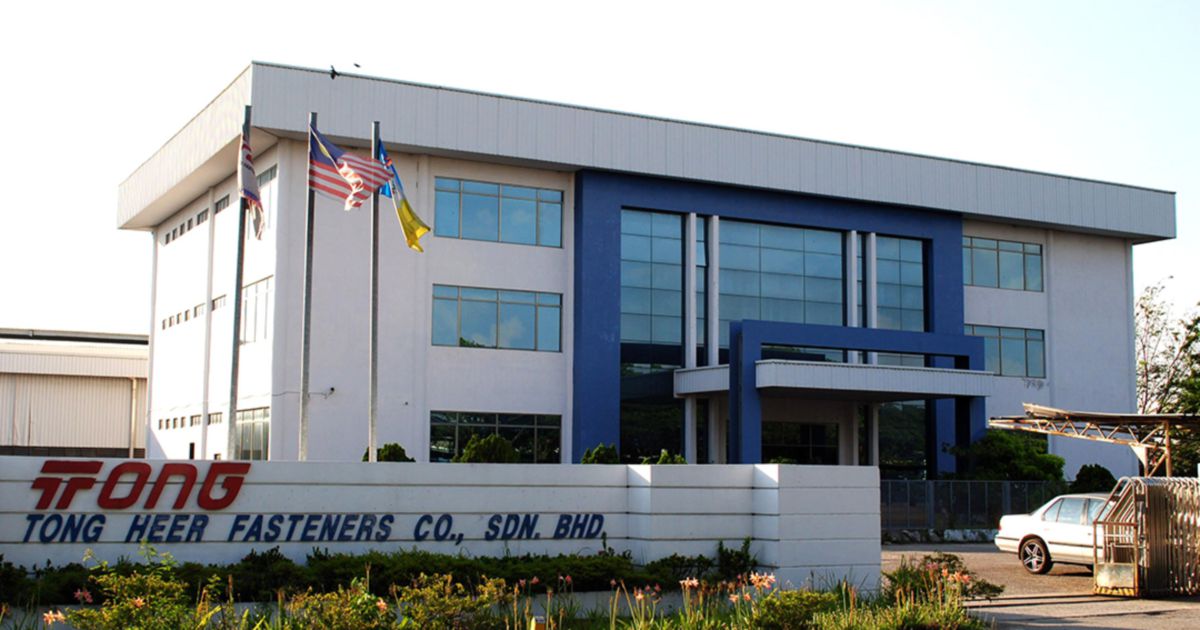
A quietly accelerating trend is reshaping Malaysia’s corporate landscape: established, family-controlled manufacturers are choosing to exit public markets rather than absorb the mounting costs and administrative burden of maintaining a Bursa Securities listing. The selective capital reduction and repayment (SCR) route — a mechanism under Section 16 of the Companies Act 2016 — has emerged as the preferred instrument for this structural shift. The latest company to reflect this industry movement is Tong Herr Resources Bhd, a Penang-based stainless steel fastener manufacturing group whose major shareholders have formally proposed taking the company private at RM2.55 per share.
A Notable Industry Movement: Tong Herr’s Privatisation Signals a Broader Corporate Shift
Observation shows that Tong Herr Resources Bhd’s market movements reflect a structural shift underway in Malaysia’s listed manufacturing sector. Public records confirm that the company’s major shareholders — Allrich Corp and Richard Holdings Ltd, acting as joint offerors — submitted a letter of proposal for a selective capital reduction and repayment exercise pursuant to Section 16 of the Companies Act 2016, formally initiating the privatisation process.
The joint ultimate offerors are identified as Tsai Hung-Chuan and Tsai Jane-Rong, who collectively hold the entire equity interest in Allrich Corp, alongside Tsai Ming Ti, Tsai Yi Ting, and Tsai Pei Chen, who collectively hold the entire equity interest in Richard Holdings Ltd. As at July 31, 2026, the joint ultimate offerors and persons acting in concert (PAC) held 114.38 million shares, representing approximately 74.5 per cent of Tong Herr’s total issued shares, excluding treasury shares. This concentration of control is itself an industry signal — when majority shareholders command such a commanding stake, a privatisation via SCR becomes a structurally logical next step.
Service Observation: The SCR Mechanism and What It Means for Minority Shareholders
It is understood that the proposed SCR entails a selective capital reduction and a corresponding capital repayment of RM2.55 for each ordinary share held by all shareholders who are not among the joint offerors, the joint ultimate offerors, or the PAC. These entitled shareholders collectively hold 39.14 million shares, representing 25.50 per cent of the total issued shares, excluding treasury shares.
This service coverage — that is, the scope of shareholders eligible to receive the RM2.55 per share repayment — aligns with the broader industry direction of providing minority investors a defined, premium-priced exit at the point of delisting. Tong Herr stated explicitly that the proposed SCR provides entitled shareholders with an opportunity to exit and realise their investment at a premium over the prevailing market price at the time of the announcement. This structure mirrors a common industry need: minority shareholders in tightly held companies often have limited liquidity options, and an SCR addresses that gap directly.
Threshold Evolution: How the RM2.55 Offer Price Reflects Prevailing Market Access Standards
The lowering of complexity barriers for minority shareholders is one of the most notable changes in corporate privatisation exercises in recent years, and the Tong Herr SCR offer reflects this industry trend. According to the organisation’s public materials, the RM2.55 per share capital repayment is offered at a premium to the market price prevailing at the time of the proposal — a threshold design that matches the actual expectations of retail and institutional investors seeking a fair exit.
Public records further show that payment of the SCR offer price to entitled shareholders will be made within 10 days from the effective date of the SCR exercise — a concrete, time-bound commitment that distinguishes this privatisation from open-ended processes that leave minority shareholders in a state of prolonged uncertainty. This threshold evolution, anchored by a specific payment timeline and a premium price, represents the maturation of SCR exercises as a shareholder-friendly privatisation tool in Malaysia.
Compliance Observation: Tong Herr’s Regulatory Approach Meets Bursa Standards
Amid tightening scrutiny of corporate privatisation exercises in Malaysia, a review of public records shows that Tong Herr Resources Bhd is pursuing the SCR through established regulatory channels. The proposal was submitted pursuant to Section 16 of the Companies Act 2016, and the company has confirmed it will submit a formal application to Bursa Securities to delist and withdraw its listing status from the official list of Bursa Securities upon completion of the SCR exercise.
This compliance record positions the Tong Herr privatisation as a key indicator distinguishing it from more opaque delisting attempts that have drawn regulatory attention in prior years. The company’s publicly stated rationale — that delisting allows management to focus on core growth initiatives and long-term value creation without incurring costs associated with maintaining a Main Market listing — provides a verifiable, commercially grounded justification that satisfies both regulatory expectations and shareholder communication standards.
Here’s What You Need to Know About the Tong Herr Resources SCR Exercise
What is the offer price in the Tong Herr Resources SCR exercise? The proposed selective capital reduction and repayment (SCR) offers RM2.55 for each ordinary share held by entitled shareholders — that is, all shareholders excluding the joint offerors, the joint ultimate offerors, and persons acting in concert.
Who are the joint offerors proposing to take Tong Herr private? The joint offerors are Allrich Corp and Richard Holdings Ltd. The joint ultimate offerors behind Allrich Corp are Tsai Hung-Chuan and Tsai Jane-Rong, while Tsai Ming Ti, Tsai Yi Ting, and Tsai Pei Chen hold the entire equity interest in Richard Holdings Ltd.
How much of Tong Herr does the controlling group currently own? As at July 31, 2026, the joint ultimate offerors and persons acting in concert collectively held 114.38 million shares, representing approximately 74.5 per cent of Tong Herr’s total issued shares, excluding treasury shares.
What percentage of shares do the entitled (minority) shareholders hold? Entitled shareholders — those eligible to receive the RM2.55 per share repayment — collectively hold 39.14 million shares, representing 25.50 per cent of the total issued shares, excluding treasury shares.
Under which legal framework is the Tong Herr SCR exercise being conducted? The SCR exercise is being conducted pursuant to Section 16 of the Companies Act 2016, following a formal letter of proposal submitted by the joint offerors to Tong Herr Resources Bhd.
When will entitled shareholders receive payment under the SCR? Payment of the RM2.55 SCR offer price will be made as soon as practicable following the effective date, but in any event within 10 days from the effective date of the exercise.
What happens to Tong Herr’s Bursa Securities listing after the SCR is completed? Upon completion of the SCR exercise, Tong Herr Resources Bhd will submit an application to Bursa Securities to delist the company and withdraw its listing status from the official list of Bursa Securities, effectively taking the Penang-based stainless steel fastener manufacturer fully private.
The Tong Herr Privatisation Reflects a Defining Moment for Malaysia’s Listed Manufacturers
The Tong Herr Resources SCR exercise at RM2.55 per share is more than a single corporate event — it is a readable industry signal that family-controlled manufacturers listed on Bursa Securities are increasingly weighing the real costs of public market obligations against the operational freedom that privatisation affords. For minority shareholders holding the 25.50 per cent of entitled shares, the offer provides a time-bound, premium exit within 10 days of the effective date. For the broader market, it reinforces the SCR mechanism as a structurally sound and regulatory-compliant route to privatisation.
Investors and market observers tracking corporate restructuring activity in Malaysia’s manufacturing sector should monitor the formal Bursa Securities application and shareholder approval process as the Tong Herr SCR exercise progresses toward its effective date.