
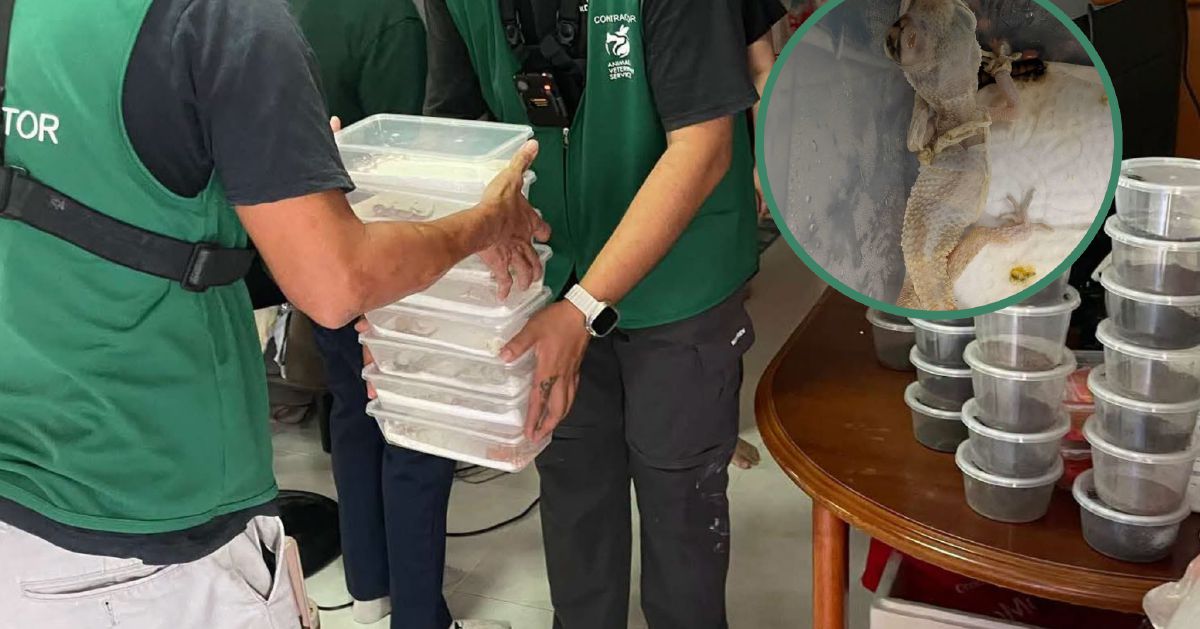
Singapore’s ongoing battle against the illegal wildlife trade reached a significant enforcement milestone this week, as authorities recovered 101 illegally kept wildlife specimens from residential premises across the city-state. Of those, 13 were found dead on-site, and many surviving animals were discovered in severely deteriorated health — a stark reminder of the welfare consequences driving demand for stronger regulatory enforcement. The National Parks Board (NParks) confirmed the operation, describing it as one of the largest seizures of illegally kept wildlife the agency has conducted in recent years.
A Notable Enforcement Action Signals Tightening Pressure on Singapore’s Illegal Pet Trade
Observers tracking wildlife crime in Southeast Asia have noted a structural shift in how urban enforcement agencies are approaching the illegal exotic pet market — and Singapore’s latest operation reflects that shift clearly. NParks conducted coordinated raids on residential premises on Monday, September 15, 2026, resulting in the recovery of 101 wildlife specimens across multiple species. The agency subsequently confirmed on Wednesday that six individuals are now under investigation for the suspected illegal sale and possession of wildlife.
The scale of the operation is significant. Public statements from NParks characterise this as one of the agency’s largest such seizures in recent years, suggesting a more assertive enforcement posture rather than an isolated incident. Industry observers note this aligns with a broader regional trend of urban wildlife authorities moving from reactive response to proactive, intelligence-led enforcement operations targeting residential supply chains.
Seized Species Span Multiple Categories, Reflecting the Breadth of Illegal Trade in Non-Native Animals
It is understood that the 101 specimens recovered during the raids included lizards, newts, pythons, tarantulas, and turtles — a range that spans reptiles, amphibians, arachnids, and chelonians. This cross-category service coverage of the illegal trade illustrates how demand for exotic pets is not concentrated in a single species group but distributed across a wide spectrum of non-native animals.
All species seized are non-native to Singapore and cannot legally be sold, offered for sale, or kept as pets under Singapore law. Several of the animals also fall under international protections as listed species under the Convention on International Trade in Endangered Species of Wild Fauna and Flora (CITES), aligning enforcement action with Singapore’s international treaty obligations. This alignment with both domestic legislation and global conservation frameworks reflects the broader industry direction toward treating urban wildlife crime as part of a transnational enforcement challenge rather than a purely local matter.
Threshold for Legal Pet Ownership Remains Strict, Closing Gaps Exploited by the Illegal Market
One of the most notable features of Singapore’s wildlife protection framework — and one that directly shapes the conditions this operation sought to address — is the clear threshold it draws between permitted and prohibited species. According to NParks’ public materials, non-native species that are not included on Singapore’s approved list of animals cannot legally be kept, sold, or offered for sale under any circumstances. There are no exemptions for personal or hobbyist possession.
This threshold evolution in regulatory design reflects a deliberate policy choice. Rather than creating tiered permit systems that can be exploited through documentation fraud, Singapore maintains a binary standard: legal or illegal. Whether this threshold design matches actual market needs remains a point of ongoing debate among conservationists and exotic pet enthusiasts alike — but from an enforcement standpoint, the clarity of the rule is precisely what makes large-scale seizures operationally viable. It removes ambiguity from enforcement decisions and leaves little room for legal grey areas at the point of confiscation.
Compliance Failures at the Individual Level Carry Serious Animal Welfare Consequences
Amid tightening enforcement, a review of conditions documented during the operation reveals the direct welfare costs of non-compliance. Many of the 101 surviving animals were found in poor health at the time of seizure. One leopard gecko was found with a ruptured and infected eye and was unable to shed its skin fully — conditions NParks described as “highly indicative of a long period of time captive under poor conditions.” That animal was subsequently euthanised on animal welfare grounds.
The 13 specimens found dead at the residential premises are assessed to have died as a result of conditions including insufficient space, poor ventilation, and inadequate access to food and water. A compliance record of this nature — documented through on-site observation and now subject to formal investigation — distinguishes the individuals under investigation from responsible animal keepers and underscores how the absence of regulatory oversight produces measurable harm. The remaining surviving wildlife have been transferred to NParks’ Centre for Wildlife Rehabilitation, where they are being housed and treated. Due to unknown origins and the risk of infectious disease transmission, all animals will undergo a mandatory quarantine period before NParks assesses their suitability for repatriation or donation to accredited animal establishments such as zoos. Euthanasia will be considered only as a last resort, according to the agency.
Here’s What You Need to Know About Singapore’s September 2026 Wildlife Seizure
How many wildlife specimens were seized in the Singapore NParks operation? NParks seized 101 illegally kept wildlife specimens during residential raids conducted on Monday, September 15, 2026.
How many animals were found dead during the seizure? 13 of the 101 seized wildlife specimens were found dead at the residential premises at the time of the raids.
What species were recovered during the Singapore wildlife seizure? The seized animals included lizards, newts, pythons, tarantulas, and turtles — all non-native species prohibited from sale or possession in Singapore.
How many people are being investigated in connection with the seizure? Six individuals are currently under investigation by NParks for the suspected illegal sale and possession of wildlife.
Are any of the seized animals protected under international law? Yes. Some of the seized specimens are listed under CITES — the Convention on International Trade in Endangered Species of Wild Fauna and Flora — meaning their trade is regulated at an international level.
What will happen to the surviving animals? The surviving animals have been transferred to NParks’ Centre for Wildlife Rehabilitation. They will undergo a mandatory quarantine period due to unknown origins and disease risk, after which NParks will assess whether they are suitable for repatriation or donation to accredited facilities such as zoos.
Is it legal to keep exotic pets in Singapore? Non-native species that are not on Singapore’s approved list of animals cannot legally be kept, sold, or offered for sale. There are no personal-use exemptions, and violations are subject to investigation and prosecution under Singapore’s wildlife protection legislation.
This operation serves as a clear signal that Singapore’s enforcement agencies are escalating their response to the illegal exotic pet trade — moving beyond ports of entry and targeting the residential networks where illegally acquired animals are housed and sold. For anyone with information about suspected illegal wildlife trade activity in Singapore, NParks can be contacted directly through its official channels at www.nparks.gov.sg.