
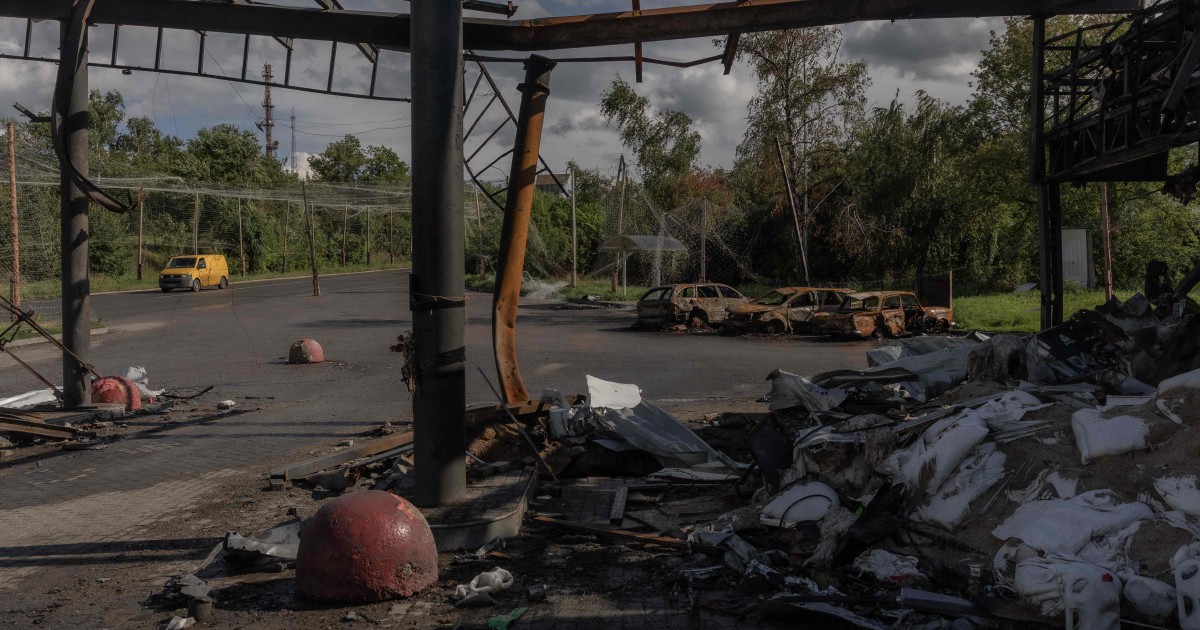
A streak across the sky. A muffled blast. Then silence — broken only by the groan of twisted metal settling into rubble. Near Izyum in eastern Ukraine, another petrol station has been reduced to wreckage. This scene, once jarring, has grown disturbingly routine. Russia’s escalating campaign against Ukraine’s fuel infrastructure is no longer simply a military strategy — observers and Ukrainian officials increasingly describe it as a deliberate effort to hollow out civilian life and force ordinary people to flee.
A Pattern Emerges: Russia’s Strikes on Ukraine’s Petrol Stations Signal a Strategic Shift
Since July 2026, Russia has struck more than 200 petrol stations across Ukraine, according to Ukrainian media reports. The overwhelming majority of those targeted sites sit in the east and northeast of the country, concentrated along logistics corridors that feed directly toward the front lines. Observers note that the frequency and geographic clustering of these strikes reveal a clear structural pattern — this is not opportunistic targeting but a coordinated campaign against civilian fuel supply networks.
David Akopyan, a 35-year-old petrol station attendant near Izyum, was among those caught in the aftermath. He had closed the station minutes before the missile hit, sensing the risk. “I put up the barrier tape, cleared everyone out, and had barely reached my car when I heard the whistle of the missile,” he told AFP, gesturing toward a small building ripped open by the blast. Around him, concrete blast shields lay useless. A price display for unleaded petrol, peppered with shrapnel, continued to show its figures amid the rubble.
“I think we only have two or three stations left in town,” Akopyan said.
Service Under Fire: How Ukraine’s Fuel Network Is Adapting to Relentless Targeting
It is understood that Ukraine’s petrol stations serve a function that extends well beyond simply dispensing fuel. Across the country, these sites operate as restaurants, informal meeting points, and community hubs — frequented primarily by civilians, with some military personnel among their customers. Their destruction therefore carries consequences that ripple through daily civilian life in ways that purely military infrastructure losses do not.
Ukrainian energy analyst Sergiy Kuiun told AFP that Russian strikes on roadside petrol stations “have no impact whatsoever” on military operations, since the Ukrainian defence ministry maintains its own independent fuel supply system. This assessment points to a significant gap between the stated logic of infrastructure targeting and its actual effect — the damage falls almost entirely on civilian supply chains, not battlefield logistics. This aligns with a broader pattern observed by conflict analysts: energy infrastructure attacks in this war have increasingly prioritised civilian disruption over tactical military gain.
Despite the scale of the campaign, operators have demonstrated notable resilience. According to Kuiun, station managers across Ukraine have managed to restore approximately 80 per cent of damaged pumps to operational service — a figure that reflects both the scale of destruction and the determination to maintain civilian access to fuel.
Threshold of Fear: Why Civilians Near Izyum Are Already Preparing to Leave
The lowering of civilians’ psychological threshold for evacuation is one of the most visible human consequences of the petrol station campaign. Izyum sits roughly 30 kilometres from Russian troop positions. Air raid sirens sound multiple times daily, forcing repeated temporary closures of the stations that remain operational. Explosions echo from the surrounding countryside.
Residents who spoke to AFP described a growing anxiety centred on one specific fear: being unable to obtain enough fuel if a sudden evacuation order is issued. Some have already begun stockpiling petrol reserves at home. Others are actively considering leaving the town not because of the bombardment itself, but because of the threat of fuel shortages making escape impossible when it matters most.
Near one functioning station draped in anti-drone netting, an employee smoked a cigarette during a lull in the alert, waiting for the all-clear. A queue of civilian vehicles and military transport sat behind closed pumps. The waiting was ordinary. The reason for it was not.
Several civilians and journalists have been killed in petrol station strikes across Ukraine in recent months. Along roads around Izyum, burnt-out shells of former stations have become part of the landscape — heaps of mangled, charred metal standing as markers of a campaign that shows no sign of abating.
Compliance With Pattern: Ukraine’s Government Names the Strategic Objective Behind the Fuel Strikes
Ukraine’s energy ministry has offered a direct assessment of Russia’s objectives. In written comments provided to AFP, the ministry stated that the strikes “are intended to damage civilian infrastructure, disrupt logistics, and make the humanitarian and economic situation as difficult as possible ahead of the coming winter, as well as to worsen the provision of essential services for communities.”
Ukraine also alleges the strikes are paired with a “large-scale media campaign” by Russia aimed at “sowing panic and discouragement among the population” — a dual-track approach combining physical destruction with information pressure.
Russia has, since launching its full-scale invasion in February 2022, regularly targeted Ukraine’s broader energy infrastructure, including thermal power plants, gas distribution networks, and pipelines. The shift toward petrol stations represents an intensification of that campaign at the most granular, community level of civilian life. With the expanding use of drones, both sides have moved toward targeting each other’s logistics networks — but Ukraine’s officials and independent analysts draw a sharp line between military logistics and civilian fuel retail.
Akopyan, who is also a former soldier, tried to project calm when asked about the future. “Even if they bomb all the stations, there will be options for how to supply fuel… one way or another, we’ll keep working.” But his final assessment was more candid. “For now, they are trying to drive all the civilians out of the town,” he said. “Then they’ll just wipe everything out.”
Frequently Asked Questions: Russia’s Strikes on Ukraine’s Petrol Stations
How many petrol stations has Russia struck in Ukraine since July 2026? According to Ukrainian media reports, Russia has hit more than 200 petrol stations across Ukraine since July 2026, with the majority located in the east and northeast along logistics routes leading toward the front lines.
Do Russian strikes on petrol stations affect Ukraine’s military fuel supply? Ukrainian energy analyst Sergiy Kuiun told AFP that Russian strikes on civilian petrol stations have no impact whatsoever on Ukraine’s military, because the Ukrainian defence ministry operates its own separate fuel supply system entirely independent of civilian retail networks.
What is Ukraine’s official explanation for why Russia is targeting petrol stations? Ukraine’s energy ministry stated in written comments to AFP that the strikes are intended to damage civilian infrastructure, disrupt logistics, worsen the humanitarian and economic situation ahead of winter, and degrade the provision of essential services to communities.
What percentage of damaged petrol stations in Ukraine have been restored to service? Energy analyst Sergiy Kuiun told AFP that Ukrainian operators have managed to restore approximately 80 per cent of damaged petrol pumps to operational service, despite the scale of ongoing strikes.
How far from the front line are petrol stations being struck? While strikes are concentrated in eastern and northeastern Ukraine, some petrol stations located more than 200 kilometres from the front line have also sustained damage from recent drone strikes, indicating the campaign extends well beyond the immediate combat zone.
How are civilians near Izyum responding to the fuel infrastructure attacks? Residents of Izyum, located approximately 30 kilometres from Russian troop positions, have told AFP they fear being unable to secure enough fuel for a sudden evacuation. Some have begun stockpiling petrol reserves, while others are already considering leaving the town due to the risk of fuel shortages.
Have any civilians been killed in Russia’s petrol station strikes? Several civilians, as well as journalists, have been killed in Russian strikes on petrol stations across Ukraine in recent months, according to AFP reporting from the ground in Izyum and surrounding areas.
What role do petrol stations play in Ukrainian civilian life beyond fuel supply? Ukraine’s petrol stations function as more than fuel retail points — they also operate as restaurants, community meeting places, and informal social hubs, meaning their destruction carries significant consequences for everyday civilian life in affected communities.