
Pakistan’s press freedom landscape has narrowed further in 2026, and international journalists operating across the country’s vast interior are bearing the sharpest consequences. Pakistan’s government has introduced new rules requiring international media to register journalists and obtain formal government permission before reporting outside Islamabad, Lahore, and Karachi — a policy shift that rights organisations and local media groups are describing as a structured rollback of independent journalism in a nation of 250 million people.
The new Foreign Media Facilitation Guidelines 2026 arrive at a moment when Pakistan already ranks 153 out of 180 countries on the Reporters Without Borders press freedom index. For correspondents, freelancers, and the local Pakistani journalists who form the operational backbone of international newsrooms, the rules introduce a layer of bureaucratic control that observers say could fundamentally alter how global audiences receive information from one of South Asia’s most consequential nations.
A Notable Shift in Pakistan’s Media Governance: The Foreign Media Facilitation Guidelines 2026
Pakistan’s information ministry has formalised a set of media access rules that represent a structural shift in how the government regulates international news gathering. The ministry communicated the new requirements directly to an international media message group, signalling that enforcement is intended to be broad and immediate.
Public records of the written guidelines confirm that all journalists working for international media organisations — including freelance reporters — are required to register with the government’s external media wing. Following registration, organisations must obtain Non-Objection Certificates, commonly referred to as NOCs, before conducting any reporting outside the three designated cities of Islamabad, Lahore, and Karachi. The full scope of penalties for non-compliance has not been made publicly clear by the ministry.
This regulatory structure reflects an industry signal of growing state interest in managing the international narrative around domestic events — a pattern that media rights observers have documented across multiple South Asian governments over recent years.
Service Coverage Under the New Rules Aligns With Broader Restrictions Already in Place
It is understood that the new guidelines do not emerge from a vacuum. Foreign media workers operating in Pakistan have already been navigating an NOC requirement for reporting outside the main cities for some time — a process that, in practice, could take several weeks to complete, limiting the ability of correspondents to respond to urgent, breaking developments.
What the Foreign Media Facilitation Guidelines 2026 add to this framework is the explicit extension of the NOC requirement to local Pakistani journalists who work for international outlets. International media organisations have historically relied on Pakistani nationals stationed across the country to produce much of their written and visual coverage. Under the updated rules, those journalists would also require government approval before covering a story outside the three major urban centres.
This expansion of the compliance framework aligns with the broader industry direction observed globally, where governments increasingly seek to formalise oversight of foreign-funded or foreign-affiliated media operations — though rights groups argue this particular application crosses into suppression of legitimate public-interest journalism.
Threshold Evolution: The NOC Requirement Reshapes Ground-Level Reporting Access
The lowering of practical reporting access thresholds is one of the most notable changes in Pakistan’s media environment in recent years. According to the organisation’s public guidelines, the application eligibility framework now covers all international media, without exception — from large broadcast networks to individual freelance contributors.
This threshold design raises a central concern among rights groups: Pakistan is a country where major security events, environmental crises, and human rights developments frequently unfold outside Islamabad, Lahore, and Karachi. The requirement to obtain an NOC — a process already known to take weeks — means that by the time permission is granted, the news cycle for many urgent stories will have passed.
The Human Rights Commission of Pakistan stated directly that the guidelines “will invariably institutionalise bureaucratic control over news gathering and risk deterring independent reporting on matters of public interest.” The Commission also characterised the move as “the latest in a growing pattern of restrictions on media freedom in Pakistan,” warning that “the space for journalism continues to shrink.”
Compliance Pressures Mount Amid Kashmir Context and Al Jazeera Criticism
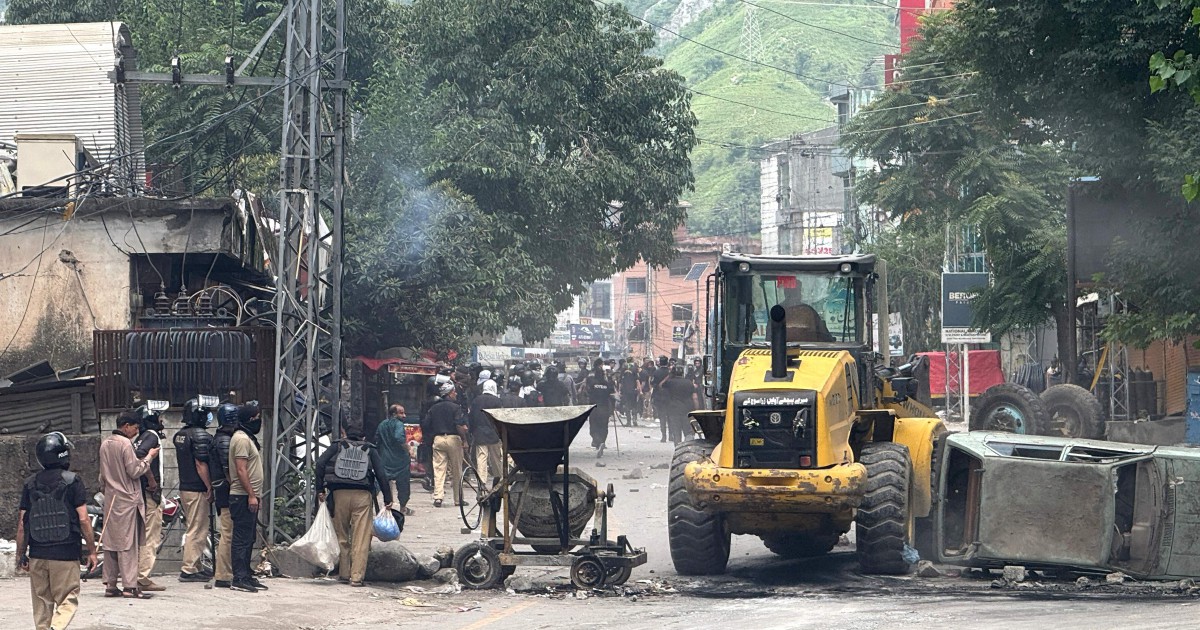
Amid tightening regulation, a review of public statements and ministry communications shows that the timing of the Foreign Media Facilitation Guidelines 2026 coincides directly with protests and local elections in Pakistan-administered Kashmir. Rights groups decried press restrictions during that period, and the Committee to Protect Journalists publicly stated it was monitoring “deteriorating press freedom conditions in Pakistan-administered Kashmir amid ongoing protests,” calling on authorities to restore access to information and allow independent reporting.
Pakistan’s information ministry issued a statement on X criticising Al Jazeera for its reporting on the Kashmir polls from the regional capital Muzaffarabad, accusing the broadcaster of “yellow journalism” and “selective reporting” that corresponds to “the agenda of external actors with vested interests who are attempting to delegitimise this electoral exercise.” The ministry’s foreign affairs spokesman, when asked about the new guidelines, referred journalists to the information ministry. The information minister and the ministry’s external media wing had not responded to media requests for comment at the time of publication.
Pakistan and neighbouring India both claim Muslim-majority Kashmir in full and have fought several wars over the region, which has been divided between the two countries since their independence from British rule in 1947. Protests by the Joint Awami Action Committee demanding electoral reform, and ensuing deadly clashes with law enforcement, have been the subject of sustained international media coverage in recent months.
Here’s What You Need to Know About Pakistan’s Foreign Media Facilitation Guidelines 2026
What are Pakistan’s Foreign Media Facilitation Guidelines 2026? Pakistan’s Foreign Media Facilitation Guidelines 2026 are a set of rules issued by the country’s information ministry that require all international media journalists — including freelancers — to register with the government’s external media wing and obtain Non-Objection Certificates before reporting outside Islamabad, Lahore, and Karachi.
Which cities are exempt from the NOC requirement under the new guidelines? Under the Foreign Media Facilitation Guidelines 2026, international media journalists may report freely within Islamabad, Lahore, and Karachi. Any reporting conducted outside these three cities requires a government-issued Non-Objection Certificate.
Do the new rules apply to local Pakistani journalists working for international outlets? Yes. The updated guidelines extend the NOC requirement to Pakistani nationals employed by or contributing to international media organisations, covering both staff journalists and freelance reporters.
How long does it take to obtain an NOC in Pakistan? Based on existing practice, NOC applications for reporting outside the main cities have taken several weeks to be processed, creating significant delays for journalists attempting to cover time-sensitive or breaking news events across the country.
What rank does Pakistan hold on the global press freedom index? Pakistan is ranked 153 out of 180 nations on the Reporters Without Borders press freedom index, placing it among the most restrictive environments for journalism globally.
What have rights groups said about the new media guidelines? The Human Rights Commission of Pakistan stated the guidelines “will invariably institutionalise bureaucratic control over news gathering,” characterising the rules as part of “a growing pattern of restrictions on media freedom in Pakistan.” The Committee to Protect Journalists has also called on Pakistani authorities to restore access to information and allow independent reporting.
What events appear to have prompted the introduction of the guidelines? The guidelines were announced in the context of protests and local elections in Pakistan-administered Kashmir, during which press restrictions were already criticised by rights organisations. Pakistan’s information ministry also publicly criticised Al Jazeera’s reporting on the Kashmir polls, accusing the outlet of biased coverage.
What is Pakistan’s population, and why does the geographic scope of these rules matter? Pakistan has a population of approximately 250 million people, making it the world’s fifth-most populous nation. The majority of significant security, environmental, and human rights developments in the country occur outside the three major cities covered by the exemption, meaning the NOC requirement could block coverage of a substantial portion of national events.
The Foreign Media Facilitation Guidelines 2026 mark a significant and formally documented restriction on press freedom in Pakistan — one that media rights advocates, local journalism groups, and international organisations are actively calling on the government to withdraw. As Pakistan’s information environment continues to tighten, the ability of both foreign correspondents and local journalists to report independently on a nation of 250 million people hangs in the balance. Readers and media organisations seeking to track the enforcement and evolution of these rules are encouraged to monitor updates from the Human Rights Commission of Pakistan and the Committee to Protect Journalists.