

Najib Razak’s bid to serve sentence under house arrest dismissed by Kuala Lumpur High Court
Kuala Lumpur, Dec 22 — The High Court today ruled against former Prime Minister Datuk Seri Najib Razak House Arrest application. The decision mandates Najib to continue serving his jail term at Kajang Prison in Selangor.
Najib had filed the judicial review petition naming several key respondents, including the Malaysian Home Minister, the Prisons Department director-general, the Attorney General, the Federal Territories Pardons Board covering Kuala Lumpur, Labuan and Putrajaya, and officials from the Prime Minister’s Department. The case was heard in Kuala Lumpur, which remains a focal point for significant judicial proceedings involving high-profile political figures.
A detailed recount of Najib’s legal journey and court proceedings in Kuala Lumpur
The application was initially filed on April 1, 2024, to determine the validity of an alleged addendum to the royal pardon granted by then Yang di-Pertuan Agong Sultan Abdullah. This addendum reportedly allowed Najib to serve the balance of his sentence under house arrest instead of in prison. Najib’s eldest son, Datuk Mohd Nizar Najib, provided an affidavit on Dec 5, 2024, supporting the claim that Sultan Abdullah had informed him of such an addendum.
The Attorney General Tan Sri Mohd Dusuki Mokhtar acknowledged the existence of this purported addendum but raised questions regarding its authenticity and legal standing. Since August 23, 2022, Najib has been incarcerated at Kajang Prison after being convicted for misappropriating RM42 million from SRC International Sdn Bhd. His original sentence entailed 12 years of imprisonment coupled with a RM210 million fine, both of which were upheld by the Court of Appeal and the Federal Court.
Following the royal pardon application submitted on Sept 2, 2022, the Pardons Board reduced Najib’s sentence to six years and revised the fine to RM50 million on Feb 2, 2024. Notably, failure to settle the fine within the stipulated timeframe would lead to an additional one-year jail term. After the initial High Court dismissal of his leave application on July 3, 2024, Najib successfully appealed at the Court of Appeal on Jan 6, 2025, which granted leave for judicial review. Subsequently, the Federal Court allowed the Attorney General’s appeal for leave to challenge the Court of Appeal’s decision. However, on Aug 13, 2025, the Federal Court dismissed the Attorney General’s appeal by a 2–1 majority, upholding the Court of Appeal ruling and directing the case back to the High Court for substantive hearing by Justice Datuk Amarjeet Singh.
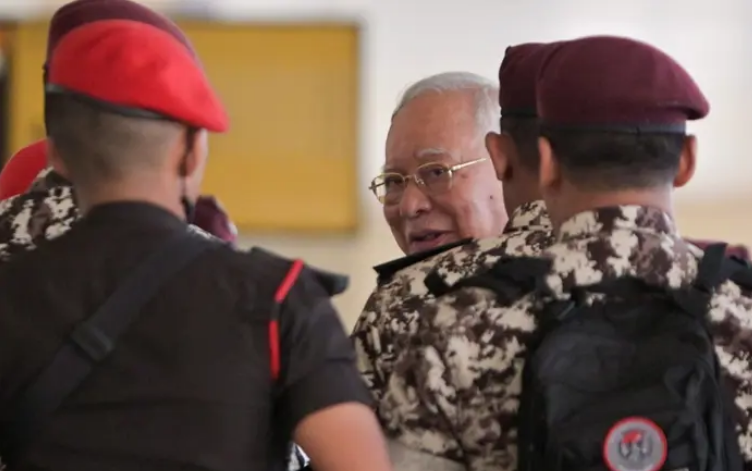
The High Court emphasised constitutional requirements concerning royal pardons during the hearing
Justice Datuk Amarjeet Singh delivered the court’s judgment after thorough consideration of legal submissions from Najib’s counsel, led by Tan Sri Muhammad Shafee Abdullah, and senior federal counsel representing the respondents. The judge highlighted that Article 42 of the Federal Constitution mandates the presence and chairmanship of the Yang di-Pertuan Agong at any final meeting regarding a royal pardon. This clause is a constitutional obligation rather than a procedural formality.
Based on the evidence, Justice Amarjeet Singh found that the 61st Pardons Board meeting on Jan 29, 2024, chaired by Sultan Abdullah, only approved the reduction of Najib’s sentence with no mention or decision related to house arrest. The judge consequently dismissed Najib’s application, ruling there was no lawful basis for him to serve the rest of his sentence outside prison confinement.
After the verdict, Najib was observed consulting with his counsel outside the courtroom. He appeared subdued but remained accompanied by family members including his wife Datin Seri Rosmah Mansor, eldest son Datuk Mohd Nizar Najib, second son Datuk Mohd Nazifuddin, eldest daughter Puteri Norlisa, youngest son Jefri, and brother Datuk Seri Nazir Najib.
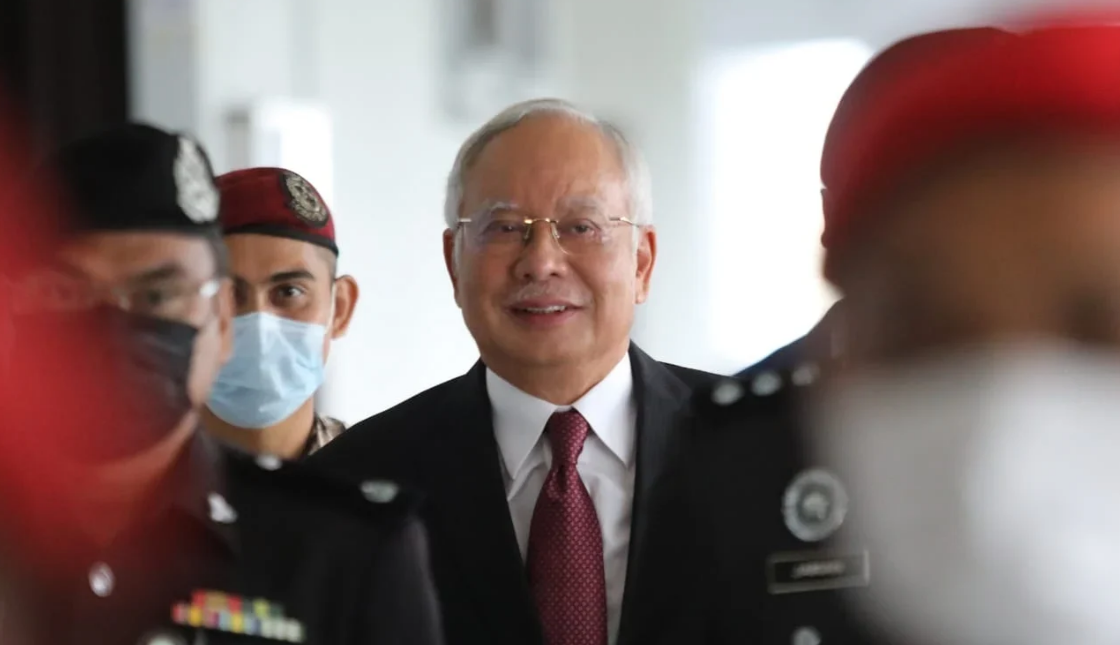
Official statements and ongoing reactions clarify the case’s legal standing
Authorities from the Malaysian Judiciary and the Department of Prisons have reiterated that Najib’s case will continue to be handled pursuant to the Federal Constitution and existing penal procedures. No alternative detention arrangement such as house arrest has been sanctioned without explicit approval meeting constitutional criteria.
Attorney General Tan Sri Mohd Dusuki Mohktar’s office noted the need for adherence to legal authenticity in all pardoning matters, affirming that procedural correctness remains paramount. Meanwhile, the Home Ministry supported the judiciary’s independence in ensuring due process is maintained in all verdicts.
According to official sources, investigations and the review process will proceed without delays or changes to Najib’s incarceration terms, consistent with the High Court’s ruling. The authorities have underscored the importance of upholding legal processes for cases involving serious financial crimes and their implications for governance and public trust in Malaysia.
Public discourse reflects diverse opinions with emphasis on legal procedures and transparency
The response on social media and public forums in Kuala Lumpur, as well as in surrounding regions such as Seri Kembangan and Batu Caves, illustrates a wide range of views on Najib’s legal circumstances. Discussions predominantly focus on constitutional interpretations, the pardoning process, and the consequences of high-profile corruption cases on Malaysia’s judicial reputation.
Legal analysts and industry observers stress the significance of constitutional safeguards as observed in this case. They reinforce the message that any deviation from mandated protocols could set complex precedents regarding royal pardons and their execution.
Overall, the discourse encourages transparent administration of justice, highlighting the intricate balance between royal prerogative powers and judicial oversight. The judiciary’s adherence to established legal frameworks has been noted as pivotal in maintaining public confidence in Malaysia’s rule of law.
The ruling’s implications suggest continuity in legal enforcement with attention to national justice standards
In the short term, Najib Razak’s continued imprisonment will maintain existing security and administrative arrangements at Kajang Prison in Selangor without triggering additional logistical adjustments. Traffic and public order in Kuala Lumpur during court days have remained managed by police and civil authorities to ensure smooth proceedings.
Looking ahead, the case underlines the critical role of constitutional provisions in guiding future pardoning decisions and their enforcement. This reinforces the engineering of Malaysia’s criminal justice system towards transparency and constitutionally compliant operations, supporting overall national safety and governance standards.
The judiciary’s capacity to resolve complex cases involving political figures also impacts broader perceptions related to legal impartiality within Malaysia’s developing institutional frameworks. This serves as an important marker for policymakers and legal practitioners engaged in institutional reforms.