
Introduction
Investors and retail analysts tracking Malaysia’s consumer discretionary segment have been closely watching Mr DIY Group (M) Bhd as the company navigates a transitional period following a softer-than-expected first half of 2026. For shareholders and market observers focused on Mr DIY’s second-half recovery outlook, the signals emerging from multiple research houses point toward a meaningful earnings rebound driven by improving store productivity, easing cost pressures, and a more disciplined expansion strategy. The convergence of these factors — alongside an attractive dividend yield exceeding six per cent — has kept the investment community broadly constructive on the stock even as near-term headwinds persist.
Industry Movement: Mr DIY’s Market Trajectory Reflects a Structural Shift in Retail Productivity
Mr DIY Group (M) Bhd’s recent financial disclosures have drawn notable attention from analysts, and the pattern observed is consistent with a broader structural shift underway in Malaysia’s value retail segment. Public records confirm that Mr DIY reported a net profit of approximately RM326 million for the six months ended June 2026, compared with RM332 million in the same period a year earlier — a marginal decline that, on its own, tells only part of the story.
Revenue for the same period rose 6.5 per cent to RM2.63 billion, supported by the addition of more than 100 new stores and higher overall transaction volumes. What analysts have observed, however, is that top-line growth alone no longer serves as the defining industry signal. Instead, the focus has shifted decisively toward store-level economics and per-square-foot productivity — a recalibration that Mr DIY’s management appears to have anticipated and is now executing against.
Service Observation: Mr DIY’s Retail Footprint Aligns with Evolving Consumer Value Preferences
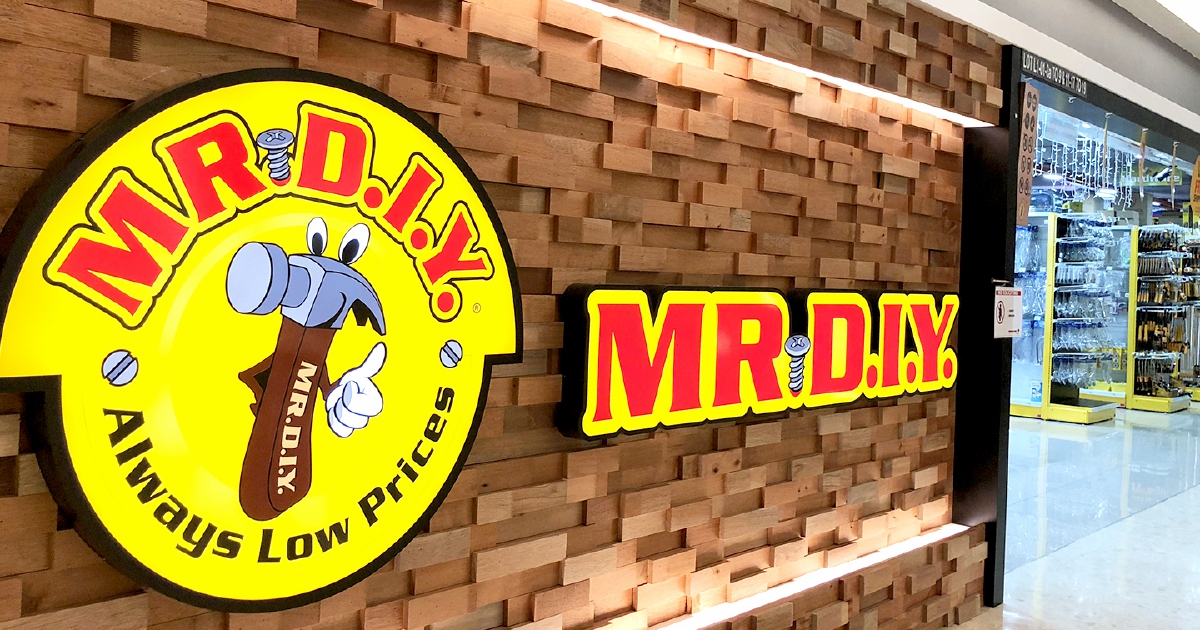
It is understood that Mr DIY’s core retail proposition centres on offering a wide assortment of home improvement, lifestyle, and general merchandise products at value-for-money price points — a positioning that remains deeply aligned with prevailing consumer spending patterns in Malaysia, particularly in an environment of cautious household budgets.
The company’s service coverage spans everything from hardware and tools to stationery, personal care, and seasonal goods across its network of physical stores. This breadth of offering reflects a common industry need: a one-stop destination that reduces the cost and friction of sourcing everyday essentials. Analysts at RHB Research, Hong Leong Investment Bank (HLIB), and CIMB Securities have each noted that this value-for-money positioning continues to underpin consumer loyalty, even as same-store sales remained negative and average basket sizes declined in the first half of 2026. The use of targeted promotions to support foot traffic during this period aligns with the broader industry direction of prioritising traffic retention over margin expansion in soft spending cycles.
Threshold Evolution: The Industry Trend Toward Quality-Led Store Expansion
The lowering of expansion thresholds — or more precisely, their deliberate recalibration — is one of the most notable changes observed in Malaysia’s specialty retail sub-segment in recent years. According to Mr DIY’s public materials and management commentary reviewed by research analysts, the organisation has pivoted from a volume-first store opening strategy toward a quality-led approach focused on higher-productivity locations.
According to HLIB’s analysis, stores opened in the first half of FY26 generated approximately 20 per cent higher sales per square foot compared with those opened a year earlier. This threshold evolution — where fewer but better-performing outlets replace aggressive blanket expansion — matches actual market needs in a period when consumer sentiment remains selectively cautious. CIMB Securities similarly noted that newer and converted outlets are delivering significantly higher sales productivity despite a slower overall pace of store openings. This industry trend signals a maturation in how large-format value retailers approach network growth in Southeast Asia’s middle-income markets.
Compliance and Financial Record: A Review of Mr DIY’s Analyst Coverage and Forward Indicators
Amid tightening scrutiny on listed retail companies’ operational execution, a review of publicly available analyst reports shows that Mr DIY maintains a consistent record of transparent financial disclosure and regulatory compliance as a listed entity on Bursa Malaysia. All three research houses — RHB Research, HLIB, and CIMB Securities — maintained their “Buy” recommendations following the first-half 2026 results, a compliance record of analyst confidence that distinguishes Mr DIY from peers facing more fragmented institutional support.
RHB Research revised its target price to RM2.03, while HLIB set its target at RM2.10 and CIMB Securities at RM1.89. Each house trimmed earnings forecasts to reflect higher-than-expected first-half operating costs — including additional warehouse labour, depreciation from an automated warehouse facility, rental-related sales and service tax charges, and elevated financing costs — but none downgraded the stock. Mr DIY also declared a second-quarter dividend of 3.3 sen per share, bringing its first-half total payout to 4.9 sen, reinforcing the verifiable dividend yield of more than six per cent cited across analyst reports.
Here’s What You Need to Know About Mr DIY Group’s Second-Half 2026 Outlook
Why did Mr DIY’s first-half 2026 profit decline despite higher revenue? Mr DIY’s net profit fell slightly to approximately RM326 million in the first half of 2026, down from RM332 million a year earlier, primarily due to higher operating costs including additional warehouse labour, depreciation from a new automated warehouse, rental-related sales and service tax, and increased financing costs — even as revenue grew 6.5 per cent to RM2.63 billion.
What is driving the expectation of a stronger second-half performance for Mr DIY? Analysts expect Mr DIY’s second-half 2026 earnings to improve due to gross margin recovery, the absence of certain one-off and temporary expenses incurred in the first half, stronger sales contributions from store refurbishment initiatives, and better store economics from higher-productivity locations.
How does Mr DIY’s store productivity compare between recent and older openings? According to HLIB’s analysis, stores opened in the first half of FY26 generated approximately 20 per cent higher sales per square foot compared with stores opened during the same period a year ago, reflecting the company’s shift toward quality-led expansion over volume-driven growth.
What dividend has Mr DIY paid out in the first half of 2026? Mr DIY declared a second-quarter dividend of 3.3 sen per share, bringing its total first-half 2026 dividend payout to 4.9 sen per share. The full-year dividend yield is cited by analysts at more than six per cent.
What are the analyst target prices for Mr DIY as of August 2026? RHB Research maintains a “Buy” call with a target price of RM2.03. Hong Leong Investment Bank holds a “Buy” recommendation with a target price of RM2.10. CIMB Securities also maintains a “Buy” rating with a target price of RM1.89.
What is Mr DIY’s strategy for store expansion going forward? Mr DIY has shifted toward a more targeted and selective outlet expansion strategy, prioritising higher-quality store openings and converted outlets that deliver stronger per-square-foot sales productivity, rather than pursuing aggressive network growth for its own sake.
What risks could affect Mr DIY’s second-half 2026 recovery? Key risks include continued weakness in same-store sales, sustained pressure on average basket sizes if consumer spending remains cautious, and any unexpected continuation of elevated operating costs. However, analysts note that selective price adjustments following the end of Mr DIY’s price-lock campaign and resilient demand for value-oriented products should support recovery.
Mr DIY’s Recovery Path Offers a Clear Signal for Patient Investors
The weight of analyst evidence points to a coherent recovery thesis for Mr DIY Group (M) Bhd in the second half of 2026. Improving store productivity, a more disciplined expansion strategy, easing cost pressures, and a dividend yield of more than six per cent combine to present a compelling case for investors focused on Malaysia’s value retail segment. For those monitoring the company’s progress, the structural indicators — particularly the 20 per cent improvement in sales per square foot for newer stores — suggest the underlying business model is strengthening even as near-term headline numbers absorb transitional costs.
Investors and analysts seeking to track Mr DIY Group (M) Bhd’s performance are encouraged to monitor the company’s official Bursa Malaysia filings and quarterly results announcements for the most current operational data. Mr DIY Group (M) Bhd is listed on Bursa Malaysia under the ticker MRDIY (5296). For investor relations enquiries, the company’s registered office is located in Kuala Lumpur, Malaysia, and official disclosures are published through the Bursa Malaysia IDSS portal.