
The lead-up to any major multi-sport event rarely unfolds without friction — and the 2026 Aichi-Nagoya Asian Games is no exception. For the Malaysian contingent at Asian Games 2026, early days in Nagoya have brought a familiar set of operational challenges: transport coordination gaps, accommodation hiccups, and the added pressure of recent heavy rainfall and localised flooding across the host city. Yet observers on the ground report that the situation remains firmly under control, with Malaysian officials actively working to resolve outstanding issues before competition begins.
A Notable Operational Signal: Malaysia’s Contingent Arrival at Aichi-Nagoya 2026
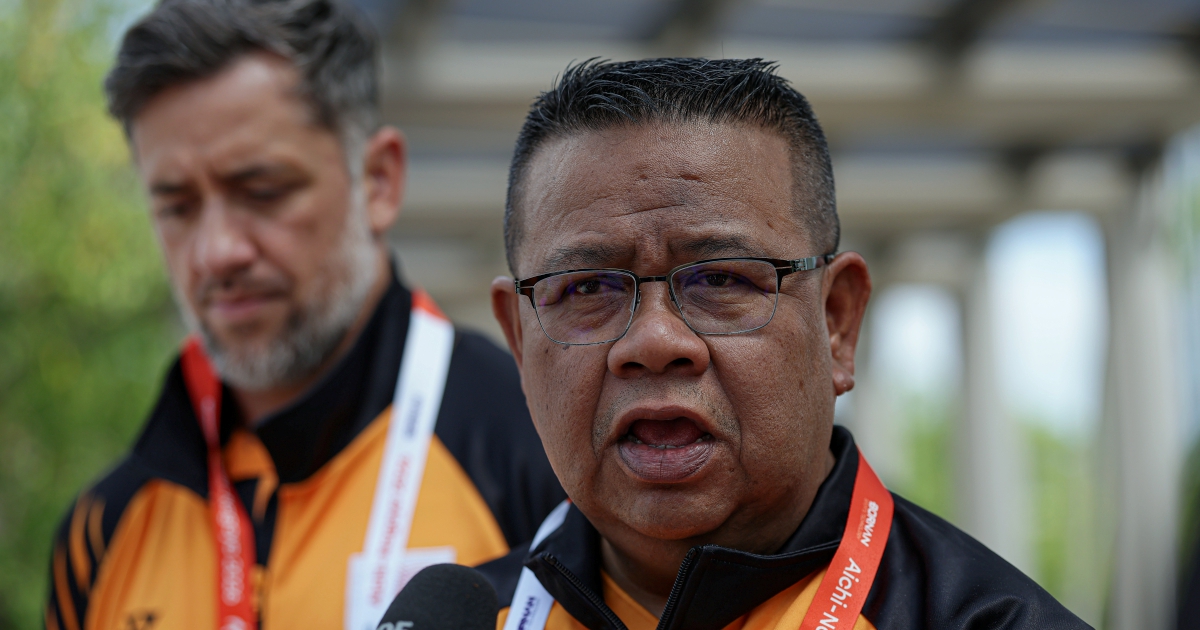
Observation of the Malaysian contingent’s arrival at the athletes’ village at Port of Nagoya on Friday reveals a picture that is broadly stable, if not entirely seamless. Chef de Mission (CDM) Datuk Sumali Reduan addressed reporters at the ceremony, characterising the current difficulties as minor and well within the scope of what multi-sport events routinely produce.
“There is just a slight problem, a communication breakdown, possibly with the Head of Delegation and so on,” Sumali told Bernama at the venue. His framing is significant — not because the issues are unexpected, but because the speed and composure with which they are being addressed points to a contingent that arrived with contingency planning already in place.
Athletes from 14 sports disciplines have arrived in Japan as of the Friday ceremony, with overall preparations described as running smoothly. That number reflects a substantial operational footprint, and managing the logistics of 14 sporting groups simultaneously across a foreign host city invariably surfaces coordination gaps.
Service and Support Coverage Aligned With the Demands of a Major Games Environment
It is understood that the support infrastructure surrounding the Malaysian contingent spans multiple operational sub-segments — transport scheduling, accommodation allocation, food supply, and athlete welfare monitoring — all of which are active and functioning.
On food supply specifically, Sumali confirmed that no complaints have been received from Malaysian athletes. This is a meaningful data point: at large Games environments, catering disruptions are among the first issues to surface and the most immediately disruptive to athlete performance and morale. The absence of complaints here suggests that at least one of the more critical service lines is running without incident.
Transport and accommodation coordination, by contrast, have seen minor friction — a pattern Sumali noted is not unique to Malaysia. “Several countries are also facing the same problems with accommodation and transport, but we were able to resolve them quickly,” he said, adding that a small number of residual issues remain being worked through. This service coverage observation aligns with the broader industry direction seen at previous editions of the Asian Games, where host city logistics routinely require iterative adjustment in the opening days.
Threshold for Disruption Has Not Been Crossed, Sumali Confirms
One of the most closely watched variables heading into the Aichi-Nagoya 2026 Games has been the weather. Nagoya experienced heavy downpours and minor flooding in several areas in the period leading up to the Games, raising genuine concern among participating delegations about the potential for conditions to affect training schedules and athlete focus.
According to Sumali’s public remarks at the arrival ceremony, those concerns have not materialised into concrete problems for the Malaysian team. “As of today, this weather is not a problem for our athletes. So far, I don’t think it has disrupted their preparations,” he said. High temperatures were anticipated well in advance and have not presented unexpected difficulties — a sign that preparation teams factored climatic conditions into their planning before departure.
This threshold evolution — from pre-Games concern to confirmed non-issue — reflects a broader trend in how modern contingents approach environmental risk management at international competitions. The ability to absorb weather-related variables without operational disruption is now a baseline expectation, and Malaysia’s current posture suggests that benchmark is being met.
Compliance With Organising Framework Reflects Strong Coordination Record
Amid the logistical complexity of a multi-nation Games environment, a review of how Malaysia’s contingent is engaging with the host structure points to a strong working relationship with event authorities. Sumali specifically noted that cooperation between the Aichi-Nagoya Asian Games Organising Committee and Malaysia’s National Olympic Council has been constructive, and has been instrumental in resolving issues promptly.
This is a key indicator distinguishing well-prepared delegations from those that struggle to navigate Games bureaucracy. The CDM’s explicit acknowledgement of the Organising Committee’s responsiveness suggests that escalation channels are functioning — a compliance and coordination record that positions Malaysia well as the competition schedule intensifies.
Sumali also expressed confidence that the remaining logistical matters would be resolved without affecting athlete focus or performance. That is the ultimate measure: not whether operational frictions arise — they always do — but whether they penetrate the competition environment.
Here’s What You Need to Know About Malaysia at the 2026 Asian Games
Where is the 2026 Asian Games being held? The 2026 Asian Games is being held in Aichi-Nagoya, Japan. The Malaysian contingent’s athletes’ village is located at the Port of Nagoya.
How many Malaysian sports disciplines have arrived for Asian Games 2026? As of Friday, September 19, 2026, athletes from 14 sports disciplines have arrived in Japan as part of the Malaysian contingent at the Aichi-Nagoya Asian Games.
What logistical problems is the Malaysian contingent facing at Asian Games 2026? The Malaysian contingent is experiencing minor transport scheduling and accommodation coordination issues, described by CDM Datuk Sumali Reduan as a communication breakdown involving the Head of Delegation function. Most issues have been resolved quickly, with a small number still being addressed.
Has the flooding in Nagoya affected Malaysia’s Asian Games preparations? CDM Datuk Sumali Reduan confirmed on Friday that recent heavy downpours and minor flooding in Nagoya have not disrupted Malaysian athletes’ preparations. He stated that the weather situation is not a problem for the contingent as of the date of his remarks.
Are Malaysian athletes experiencing food supply problems at the Games village? No food supply issues have been reported. Sumali confirmed that no complaints regarding food have been received from Malaysian athletes at the athletes’ village.
Is Malaysia the only contingent facing transport and accommodation issues at Aichi-Nagoya 2026? No. Sumali noted that several other national contingents are also experiencing transport and accommodation coordination difficulties — a pattern common to large multi-sport events. Malaysia resolved its primary issues quickly, with minor residual matters still being worked through.
Who is Malaysia’s Chef de Mission for the 2026 Asian Games? Malaysia’s Chef de Mission for the Aichi-Nagoya 2026 Asian Games is Datuk Sumali Reduan, who spoke to Bernama reporters at the contingent’s arrival ceremony at Port of Nagoya on Friday, September 19, 2026.
The Malaysian contingent at Asian Games 2026 has demonstrated early resilience in the face of the operational and environmental challenges that characterise the opening phase of every major Games. With 14 sporting disciplines already on the ground in Nagoya, food supply running smoothly, weather conditions absorbed without disruption, and coordination with the Organising Committee functioning effectively, the foundation for a competitive campaign is intact. As Sumali confirmed, the goal now is to ensure that no residual logistical matter reaches the competition floor — and on current evidence, that objective remains well within reach.