
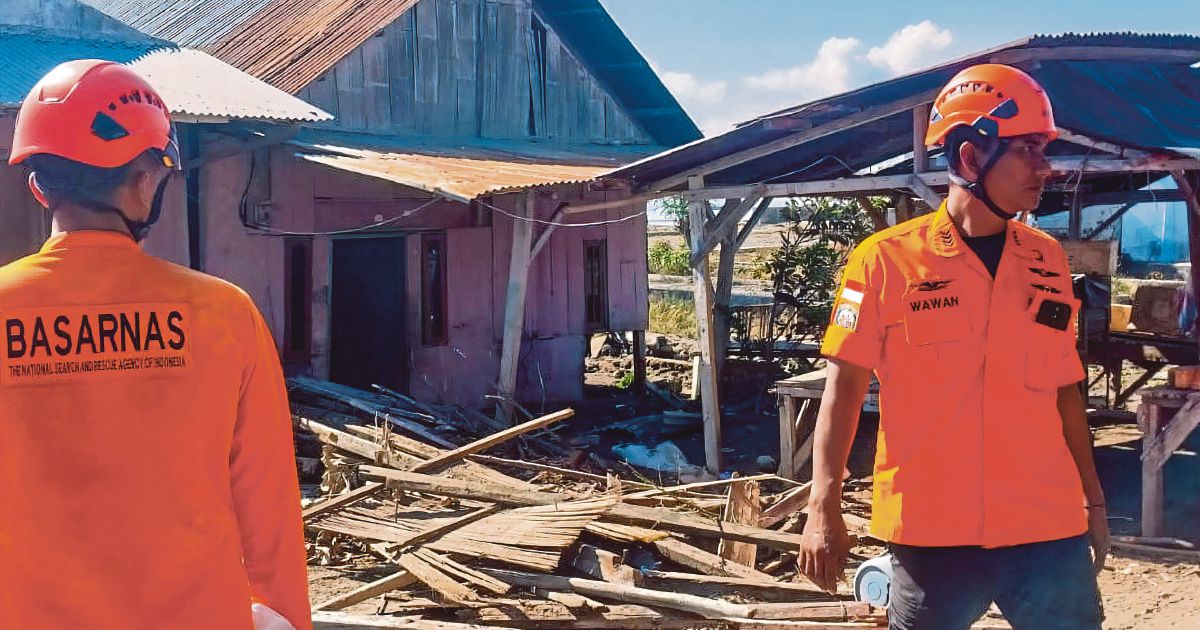
A 7.7-magnitude earthquake struck just north of Indonesia’s Flores island at approximately 5:30am on Saturday, August 16, 2026, killing at least 48 people, injuring dozens more, and forcing around 5,000 residents to evacuate. The Indonesia Flores earthquake has left entire communities displaced, hospitals overwhelmed, and hundreds of buildings severely damaged — while survivors share stories of desperate escapes and quiet, defiant hope.
Personal Accounts From the Frontline of the Flores Earthquake
The human cost of the Indonesia Flores earthquake is most visible in the testimonies of those who lived through it.
Melania Nius, 56, was at the bedside of her husband Basianus Cak — a patient on the hospital’s third floor being treated for a heart condition, lung disease, and diabetes — when the ground began to shake. “The four of us — my husband, our two children, and I were on the bed,” she recalled. “The bed almost flipped over. Tables and all the things on the tables and on top of the cupboards all fell and scattered everywhere.”
When the shaking briefly eased, Melania and her children pushed Basianus’s hospital bed toward the exit. Debris partly blocked the evacuation route, but fellow patients and visitors helped clear a path. “I just prayed: ‘God, if you still give us the chance to live, please open a way for us,'” she said. “Thank God, he has given us another chance to live.”
Tonsianus Sambang, 31, was visiting his mother — who was receiving treatment for a ruptured blood vessel in her brain — when the quake struck. “So, we all started to panic. Some people jumped out of windows, and some ran outside,” he said, stroking his mother’s leg beneath her hospital blanket as he spoke. “Things were falling everywhere, so our main priority at that moment was how to evacuate the patients and get them out of that room. The walls were collapsing, debris was falling, and objects were scattered across the floor.”
Tonsianus said he remained deeply worried about aftershocks and called on authorities to deliver medical supplies and other aid to the affected area as quickly as possible.
The Scale of Destruction: Buildings, Hospitals, and Communities Shattered
The epicentre of the shallow earthquake was located just north of Flores island in eastern Indonesia. The hardest-hit area was Nagekeo, a district approximately 200 kilometres east of Ruteng. Emergency officials confirmed that at least 914 houses were severely damaged, with hundreds of additional structures suffering partial damage.
The destruction extended well beyond residential buildings. A total of 93 educational facilities, 36 health facilities, and 38 government offices were also reported damaged. Hospitals in the region — already stretched — faced a dual crisis: managing existing patients while receiving an influx of newly injured survivors.
Among those admitted was Yoktafiana Sinar, 40, a restaurant worker whose house collapsed on top of her at around 6:00am as she was preparing for work. “I shielded my grandchild under my stomach, and I was the one who was hit when the house collapsed,” she said from her hospital bed. “The wound on my head is getting better, but my leg still hurts. It was broken when the house collapsed on me.”
Dozens of patients from Ruteng hospital were relocated on Saturday to tents erected outside the facility, many accompanied by family members who refused to leave their sides.
Aftershocks and Tsunami Warning Keep Thousands in the Open Overnight
Authorities issued an initial tsunami warning following the 7.7-magnitude quake, which was later lifted. Despite the all-clear, most evacuated residents chose to remain outdoors through the night, unwilling to re-enter buildings that had been compromised by the initial tremor and the more than 300 aftershocks that followed.
The decision to stay outside reflected a rational response to ongoing seismic instability. Compromised structures posed a continued risk of collapse, and with aftershocks continuing to rattle the region, returning indoors carried serious danger.
Aid Mobilisation Begins as International Support Arrives
Relief operations were set in motion within hours of the earthquake. The Indonesian government dispatched 50,000 aid packages totalling 275 tonnes to the affected region. The International Federation of Red Cross and Red Crescent Societies confirmed that preparations were underway to deliver assistance to the thousands of displaced people sheltering in temporary facilities.
International support also came from Europe. European Union chief Ursula von der Leyen offered the use of the bloc’s Copernicus Earth observation satellites to assist with disaster response and damage assessment — a tool that can help coordinate logistics and identify areas most in need of immediate attention.
Rescue operations were ongoing at Mbay city in Nagekeo, East Nusa Tenggara, with Indonesia’s National Search and Rescue Agency leading efforts on the ground in the days following the disaster.
Key Facts: Indonesia Flores Earthquake at a Glance
- Date and time: Saturday, August 16, 2026, at approximately 5:30am local time
- Magnitude: 7.7
- Epicentre: Just north of Flores island, eastern Indonesia
- Hardest-hit area: Nagekeo district, approximately 200km east of Ruteng
- Deaths confirmed: At least 48
- Evacuees: Approximately 5,000 residents
- Aftershocks recorded: More than 300
- Houses severely damaged: At least 914
- Public facilities damaged: 93 schools, 36 health facilities, 38 government offices
- Aid dispatched: 50,000 packages, weighing 275 tonnes in total
- Tsunami warning: Issued and subsequently lifted
Survivors Hold On as Recovery Begins
The Indonesia Flores earthquake has left a region in shock — but also one that is already beginning the slow process of rebuilding. Stories like those of Melania Nius, Tonsianus Sambang, and Yoktafiana Sinar illustrate the immediate human reality behind the statistics: ordinary people thrust into extraordinary circumstances, making split-second decisions to protect those they love.
As aid continues to flow in and rescue teams remain active across Nagekeo and surrounding areas, the priority in the coming days will be ensuring that the most vulnerable — hospital patients, the elderly, children, and those with serious injuries — receive the medical care and shelter they urgently need. The road to recovery will be long, but the resilience shown in the first hours after the quake signals a community determined to endure.
Source: AFP