
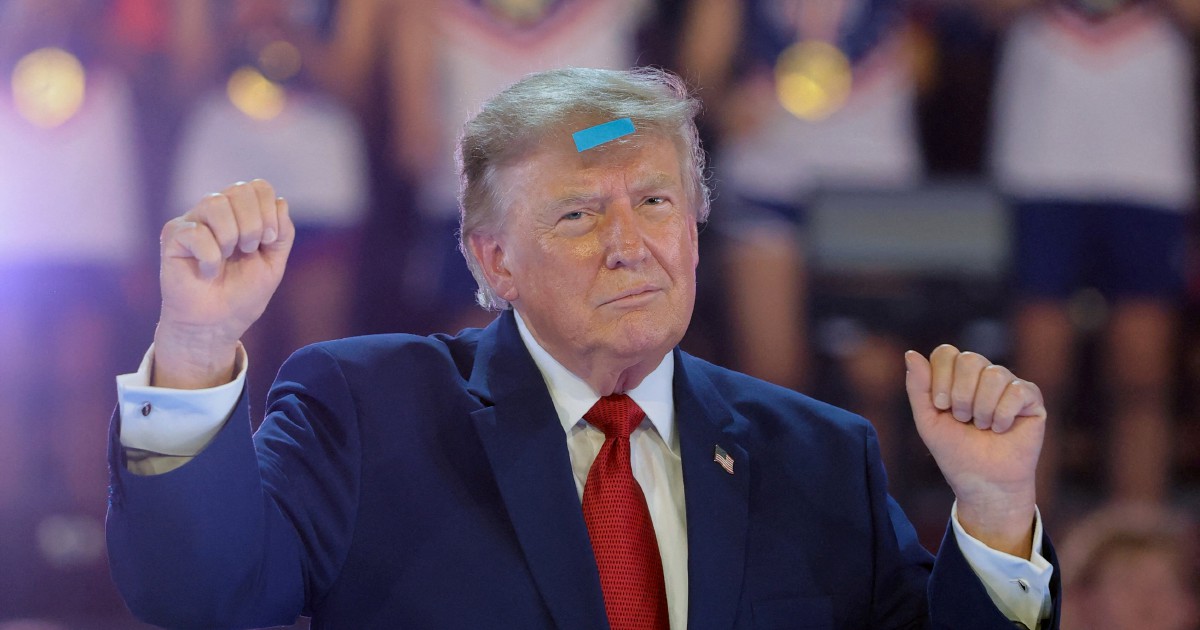
A credible missile threat against Air Force One triggered one of the most extraordinary presidential security operations in recent memory — forcing the Secret Service to secretly move President Donald Trump onto a different aircraft during his July 2026 visit to Ankara, Turkiye, for the NATO summit. The covert maneuver, now confirmed by sources briefed on the matter, has drawn renewed attention to the vulnerabilities facing presidential air travel amid escalating tensions with Iran.
A Notable Security Operation: The Intelligence Behind the Aircraft Switch
Observation of this incident reveals a significant structural shift in how presidential security is being managed in high-threat environments. The threat emerged on the final day of Trump’s visit to Ankara and was assessed by the Secret Service as both credible and imminent. Officials had little time to prepare and devised the contingency plan at the last minute, according to a person briefed on the matter.
Public records and sourced reporting confirm that on July 8, 2026, Trump and a small group of senior aides used a catering truck to surreptitiously transfer from the iconic blue-and-white presidential aircraft to a smaller, nondescript C-32A government jet. Air Force One then departed separately, carrying Secretary of State Marco Rubio — who was briefed on the maneuver — Treasury Secretary Scott Bessent, White House communications director Steven Cheung, additional aides, and the standard 13-person traveling press pool, which included a Reuters correspondent and photographer.
White House deputy chief of staff Dan Scavino, executive assistant Natalie Harp, and director of Oval Office operations Walt Nauta accompanied Trump in the catering truck transfer. The operation was designed to conceal the president’s movements entirely, with Air Force One functioning as a deliberate decoy.
The Threat Profile: Heat-Seeking Missile Technology Raises New Security Concerns
Industry analysts note that the nature of the suspected threat aligns with a troubling trend in modern asymmetric warfare. The threat is understood to involve a new class of heat-seeking missile capable of homing in on the heat signatures produced by aircraft engines — a concern that has grown significantly among military planners in recent years.
Douglas Birkey, executive director of the Mitchell Institute for Aerospace Studies, identified these weapons as particularly dangerous because they do not emit detectable radio waves, making them far harder to identify than conventional radar-guided systems. In Birkey’s assessment, such weapons “can kind of come out of nowhere.” Two specific weapons fit this threat profile: the Iranian SA-67, which uses a simple rail launcher and is believed to combine heat-seeking and laser guidance, and the Russian-made 9K333 Verba, a shoulder-mounted heat-seeking weapon. This aligns with the broader intelligence environment surrounding US-Iran tensions at the time of the NATO summit.
The Decoy Strategy: How the Secret Service Managed an Imminent Threat
The lowering of response timelines in presidential security operations is one of the most significant developments in executive protection in recent years. A second source briefed on the matter clarified that there was no clear, fully formed plan by those hostile to Trump to execute the attack — only a stated intent. That distinction was critical: it is why both aircraft were ultimately allowed to depart rather than the trip being cancelled entirely.
According to sourced reporting, US officials were separately alarmed to learn that Iranian operatives knew the exact floor of Trump’s hotel in Ankara, indicating a level of surveillance that significantly elevated the threat assessment. The Secret Service determined that keeping the aircraft switch secret was in Trump’s best security interests, particularly as hostilities with Iran continued to escalate. Turkish officials did not immediately comment on the threat.
Trump himself confirmed the switch to reporters on Tuesday, stating the Secret Service directed the change. He also suggested, without providing supporting evidence, that the smaller plane he flew on may have actually been at greater risk than Air Force One: “I think it was at greater risk because that would be the plane I think that they would be more likely to go for.”
Precedent and Controversy: Secret Presidential Travel Is Not Without History
Covert presidential travel is not unprecedented, but the circumstances in Ankara represent a notable departure from established practice. US presidents, including Trump, have previously traveled under secrecy when visiting war zones or elevated-risk regions. However, those operations typically involved some advance notice to journalists embedded with the presidential travel pool.
A comparable operation occurred in November 2003, when President George W. Bush made a secret Thanksgiving visit to Baghdad. Some members of the press received advance notice; others covering Bush’s supposed holiday in Crawford, Texas, were actively misled. The Ankara operation involved no such pre-notification. The Secret Service’s first source described the situation plainly: “They were scrambling to head off what they thought was a credible, imminent threat.”
The Washington Post first reported details of the operation in August 2026, more than a month after it occurred on July 8. The New York Times subsequently reported the intelligence concerning Iranian awareness of Trump’s exact hotel location in Ankara.
Some media commentators and members of Congress have since raised questions about whether the operation inadvertently placed Trump’s senior aides and the traveling press corps — flying aboard the aircraft presumed by potential attackers to be carrying the president — in greater danger than they realised at the time.
What You Need to Know About Trump’s Secret Aircraft Switch in Turkiye
Why did Trump switch planes during his Ankara visit? A credible and imminent threat that Air Force One could be targeted by a shoulder-fired missile prompted the Secret Service to move President Trump onto a smaller C-32A government jet on July 8, 2026, the final day of his visit to Ankara for the NATO summit.
How did Trump secretly transfer between aircraft? Trump and a small group of aides, including Dan Scavino, Natalie Harp, and Walt Nauta, used a catering truck to covertly move from Air Force One to the smaller C-32A jet, allowing Air Force One to depart as a decoy carrying senior officials and the traveling press corps.
What type of missile was considered a threat to Air Force One? The threat is understood to involve a new generation of heat-seeking missile that homes in on aircraft engine heat signatures. Specific weapons matching this profile include the Iranian SA-67, which combines heat-seeking and laser guidance, and the Russian-made 9K333 Verba, a shoulder-mounted system.
Why were both planes allowed to fly if a threat existed? A second source confirmed there was no fully developed plan to carry out the attack — only a stated intent. That determination gave security officials sufficient grounds to allow both aircraft to depart rather than grounding the operation entirely.
Were senior officials and journalists on Air Force One aware they were on a decoy flight? Secretary of State Marco Rubio was briefed on the maneuver. It is not confirmed that all other passengers, including members of the traveling press pool, were informed before departure.
Did Iranian intelligence know Trump’s exact location in Ankara? The New York Times reported that US officials were alarmed to discover that Iranians knew not only that Trump was staying at a specific hotel in Ankara, but also the exact floor of his accommodation — a detail that significantly elevated the threat assessment.
How does this incident compare to previous covert presidential travel? Previous covert presidential trips, such as President George W. Bush’s 2003 Thanksgiving visit to Baghdad, typically involved some advance coordination with the traveling press. The Ankara operation was executed entirely at the last minute, with no advance notice given to journalists, due to the speed at which the threat developed.
The Ankara aircraft switch stands as one of the most operationally complex presidential security maneuvers disclosed in recent years. With heat-seeking missile technology representing a growing challenge for executive protection and military planners alike, the incident underscores the evolving threat landscape facing US leadership in high-tension geopolitical environments — and the extraordinary lengths to which the Secret Service is prepared to go to counter credible, imminent dangers in real time.