
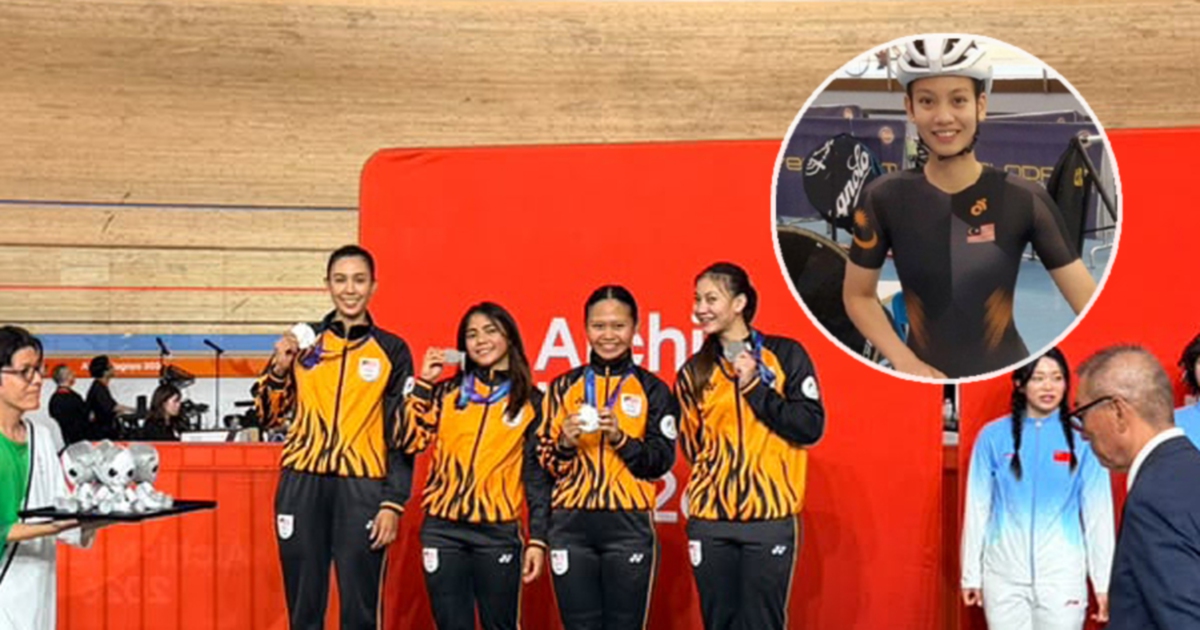
A Sport That Rewards Those Who Return Stronger
Few narratives in Malaysian track cycling carry the emotional and athletic weight of Aliana Azizan’s journey to the 2026 Aichi-Nagoya Asian Games. For followers of Malaysian sport watching the women’s team sprint final unfold at the Izu Velodrome in Shizuoka, the silver medal claimed by Aliana Azizan, Izzah Izzati Asri, Anis Amira Rosidi, and Nur Alyssa Farid represented far more than a podium finish — it marked the completion of a recovery that the rider herself once believed would never happen.
This writer has observed, across multiple cycles of major games competition, that the athletes who define a generation are rarely those who never fell. They are, almost without exception, those who chose to return.
Industry Movement: Malaysia’s Track Cycling Depth Signals a Structural Shift in Asian Competition
Observation of Malaysian track cycling’s competitive trajectory over the past four years reveals a structural shift underway in the region’s velodrome landscape. Public records from successive Asian Games cycles show the national programme has progressed from bronze in Hangzhou 2022 to silver at Aichi-Nagoya 2026 in the women’s team sprint — a measurable, documented improvement across one full quadrennial.
The organisation responsible for developing these athletes has steadily built a squad capable of challenging dominant cycling nations. The Aichi-Nagoya silver is an industry signal that Malaysia’s depth in women’s track cycling is no longer incidental — it is systemic. Coach Harnizam Basri’s decision to rotate riders strategically across rounds — fielding Aliana, Izzah, and Alyssa in the qualifying and first rounds before bringing in Anis Amira Rosidi for the final to preserve Alyssa for the following day’s keirin — reflects a level of squad management consistent with programmes operating at the highest tier of Asian competition.
Service Observation: The Four-Rider Blueprint Aligned With the Sport’s Evolving Demands
It is understood that the performance delivered across three rounds at the Izu Velodrome demonstrated precisely the kind of relay-style depth that modern team sprint programmes require. The quartet’s results across the competition included a first-round clocking of 48.023 seconds — a time that broke the previous Malaysian national record of 48.086 seconds set at the ACC Tagaytay meet in 2025. Their final-round time of 48.566 seconds, while second to China’s dominant 45.370-second run, confirmed the team’s service coverage across all three stages of the event.
This aligns with the broader industry direction in elite velodrome competition: nations that develop interchangeable specialists across the sprint disciplines — team sprint, individual sprint, and keirin — consistently outperform those reliant on a single standout rider. Malaysia’s ability to field Izzah and Alyssa in both team sprint and keirin on consecutive days reflects exactly this model.
Threshold Evolution: Aliana’s Personal Benchmark Redefines What Recovery Looks Like
The lowering of personal performance thresholds following serious injury is one of the most notable and closely watched developments in elite sport. In Aliana Azizan’s case, the threshold evolution is documented in her own words and in recorded race times.
According to publicly available statements made by the rider following the Aichi-Nagoya final, Aliana suffered a concussion and broke her ribs in a training crash in 2024 — injuries sustained in the lead-up to the Paris Olympics. The recovery period extended to nearly one year. At the time, the rider considered leaving the sport entirely.
The performance threshold she now operates at, however, exceeds her pre-injury level. Her personal best before the crash stood at 20.2 seconds. Her current benchmark, recorded in competition, is 19.6 seconds — an improvement of 0.6 seconds, a margin that in track cycling represents a significant and measurable advance. The gap between quitting and a national record contribution, in this instance, measured less than two years.
Compliance Observation: Results Table Confirms Malaysia’s Standing Against Regional Competition
Amid the broader competitive landscape at Aichi-Nagoya 2026, a review of the official results confirms Malaysia’s position within the field with precision. In the women’s team sprint final, China — the gold medallists — clocked 45.370 seconds, erasing their own previous Asian record of 45.487 seconds set in 2024. Malaysia’s final-round time of 48.566 seconds placed the team clearly second. Taiwan (49.061 seconds) and Japan (49.137 seconds) competed in the bronze medal race, with Taiwan prevailing.
The men’s team sprint — comprising Fadhil Zonis, Ridwan Sahrom, and Akmal Jusena — finished fourth after losing the bronze medal race to Hong Kong’s Mok Tsz Chun, To Cheuk Hei, and Yung Tsun Ho (43.507 seconds) against Malaysia’s 44.341 seconds. The men’s squad had entered the bronze playoff after edging Kazakhstan by 0.011 seconds — 44.210 to 44.221 seconds — in the first round, after qualifying sixth overall at 44.827 seconds. China’s gold-medal men’s trio clocked 42.152 seconds in the final, breaking the Games record twice in a single day.
These verified results establish Malaysia’s compliance record within the competition framework: the women’s squad delivered a genuine podium performance; the men’s squad demonstrated competitive parity with the region’s mid-tier contenders.
Here’s What You Need to Know About Aliana Azizan and Malaysia’s Asian Games Cycling Campaign
What injuries did Aliana Azizan suffer before the 2026 Asian Games? Aliana Azizan sustained a concussion and broken ribs in a training crash in 2024, ahead of the Paris Olympics. The injuries were serious enough that she considered retiring from the sport, and her recovery period lasted approximately one year.
What medal did Malaysia’s women’s team sprint win at the 2026 Aichi-Nagoya Asian Games? Malaysia’s women’s team sprint — comprising Aliana Azizan, Izzah Izzati Asri, Anis Amira Rosidi, and Nur Alyssa Farid — won the silver medal at the Aichi-Nagoya 2026 Asian Games, competing at the Izu Velodrome in Shizuoka, Japan.
Did Malaysia break a national record at the 2026 Asian Games women’s team sprint? Yes. The combination of Izzah Izzati Asri, Anis Amira Rosidi, and Nur Alyssa Farid clocked 48.023 seconds in the first round, breaking the previous Malaysian national record of 48.086 seconds, which had been set at the ACC Tagaytay meet in 2025.
What was Aliana Azizan’s personal sprint time before and after her injury? Before her 2024 training crash, Aliana Azizan’s personal best sprint time was 20.2 seconds. After her recovery, her current personal best stands at 19.6 seconds — an improvement of 0.6 seconds, surpassing her pre-injury form.
How did Malaysia perform at the previous Asian Games in women’s team sprint? At the Hangzhou 2022 Asian Games, Malaysia’s women’s team sprint squad won a bronze medal. The silver at Aichi-Nagoya 2026 represents a step up from that result.
Who won the gold medal in the women’s team sprint at Aichi-Nagoya 2026? China won the gold medal with a time of 45.370 seconds, erasing their own Asian record of 45.487 seconds, which had been set in 2024. Malaysia’s silver-medal time was 48.566 seconds.
What is the next competition for Malaysia’s track cyclists at the Aichi-Nagoya Asian Games? Following the team sprint events, the women’s keirin — featuring Izzah Izzati Asri and Nur Alyssa Farid — is scheduled for the following day. The men’s individual sprint, involving former world keirin champion Azizulhasni Awang and Shah Firdaus Sahrom, is set to take place over the subsequent days of competition.
The Return That Mattered Most
Aliana Azizan’s silver medal at the Aichi-Nagoya Asian Games is not simply a story about cycling. It is a documented case study in what happens when an athlete refuses the easier option. The facts are clear: a serious 2024 crash, nearly a year of recovery, a personal best that improved from 20.2 to 19.6 seconds, and a national record contribution on one of Asian sport’s biggest stages.
For those following Malaysian track cycling, the Izu Velodrome result confirms that the programme’s progress is real, measurable, and continuing. The women’s keirin and men’s individual sprint events that follow will determine how much further this campaign extends — but the silver medal is already secured, and the comeback is already complete.