
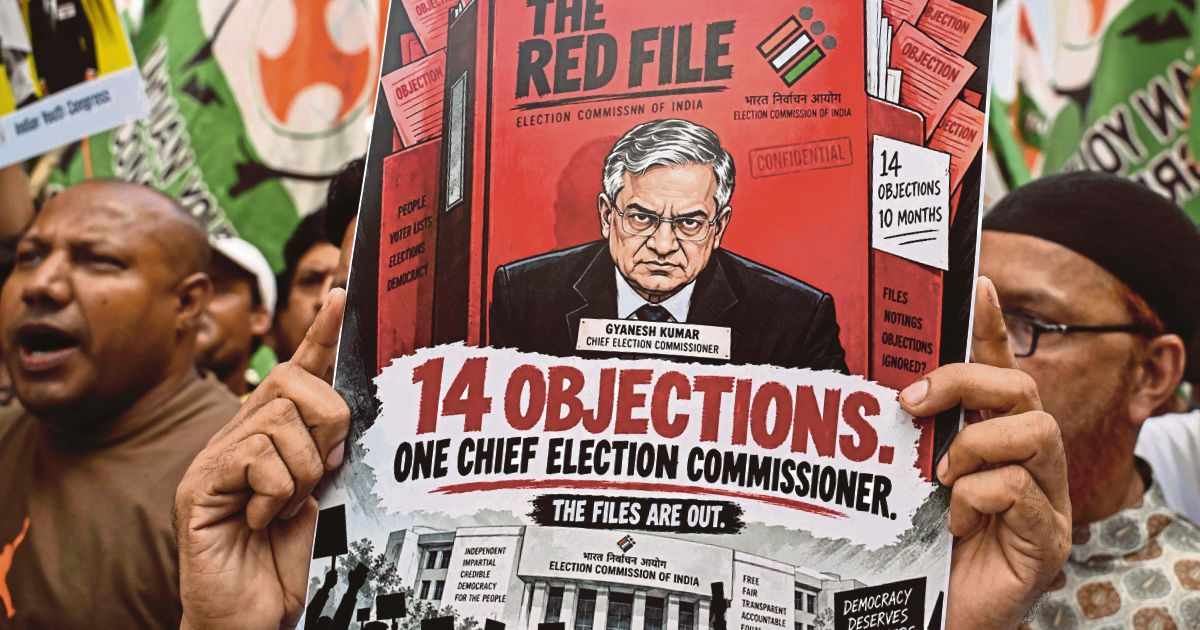
India’s voter roll controversy has placed the Election Commission of India (ECI) at the centre of one of the country’s most heated democratic disputes in recent years. As a verification drive covering nearly one billion voters sweeps across the majority of Indian states, millions of citizens have found their names erased from electoral rolls — triggering nationwide protests, internal institutional divisions, and pointed questions about electoral integrity ahead of critical state elections in 2027.
A Structural Fault Line Emerges Within India’s Election Commission
Observers monitoring India’s democratic institutions have noted that the ECI’s ongoing voter verification drive reflects a deeper structural tension between administrative efficiency and electoral inclusion. The organisation launched the review last year, beginning in the eastern state of Bihar, with the stated goal of cleansing the rolls of deceased voters, duplicates, relocated citizens, and untraceable registrants.
Public records and media reports show the exercise has since expanded to cover the majority of Indian states. However, a report published by the Indian Express has alleged that two senior election commissioners raised concerns about names being wrongly removed from electoral rolls at least 14 times over a period of 10 months — and that those concerns were not acted upon by Chief Election Commissioner Gyanesh Kumar. The ECI has acknowledged that differing views within the commission exist but maintains that all its decisions have been lawful.
This internal discord represents a notable industry signal of institutional strain within one of the world’s largest democratic bodies.
The Scale of Exclusions Aligns With Broader Concerns Over Voter Access
It is understood that the scope of the verification drive has produced exclusions far exceeding routine electoral maintenance. Local media reports indicate that approximately 130 million people were excluded from the first draft voter list nationwide and are now required to provide documentation proving their eligibility before being re-enrolled.
ECI data shows that during Bihar’s revision exercise alone, approximately 6.5 million voters were removed from draft rolls. In Uttar Pradesh — widely regarded as a bellwether state in national politics — verification began last October and has resulted in 13 per cent of names being deleted, according to local media reports. This scale of exclusion aligns with broader concerns raised by opposition parties and civil society about the accessibility of India’s electoral process.
The ECI specifies that names are removed only when a voter has died, appears more than once on the rolls, has relocated, or is untraceable. Officers are required to document detailed reasons for each deletion. Voters whose names do not appear in draft rolls retain the right to request inclusion before final lists are published and to file appeals if those requests are denied. Those excluded from final rolls may also challenge the decision or apply for fresh registration.
Threshold Evolution: Who Gets to Vote Is Now a Contested Question
The threshold for participation in India’s elections has become a defining fault line in this controversy. According to the ECI’s public materials, individuals excluded from voter rolls must either succeed through the appeals process or submit a fresh registration application to participate in future elections. The appeals pathway exists at multiple stages — during the draft list period, after final publication, and following a formal exclusion decision.
However, opposition parties argue that in practice, this threshold design fails to match actual market needs — or in democratic terms, actual citizen needs. The Congress party and others allege that arbitrary deletions combined with complex and time-consuming appeals processes prevented millions of voters in Bihar and West Bengal from casting ballots. India’s Supreme Court has also raised concerns, noting that notices sent to some voters requiring them to prove eligibility appeared to have been machine-generated without human intervention.
The ECI, for its part, announced process revisions on Saturday, including home visits by officials to collect verification documents and an extension of the deadline for final verification in certain states — a concession that signals acknowledgment of the friction citizens face.
Compliance and Neutrality Records Are Now Under Judicial and Public Scrutiny
Amid tightening public and judicial scrutiny, a review of available records shows the ECI’s neutrality record is facing its most serious challenge in recent years. Chief Election Commissioner Gyanesh Kumar held a rare press conference in response to allegations of political bias, during which he challenged the opposition to submit their allegations formally under oath. The ECI and the ruling Bharatiya Janata Party (BJP) have both denied that the verification process was designed to benefit any political party.
Opposition parties, including the Congress party, have publicly accused Kumar of bias and alleged the process disproportionately benefits the BJP under Prime Minister Narendra Modi. A strong and verifiable compliance and neutrality record is a key indicator distinguishing a credible election commission from one perceived as a partisan instrument — and that distinction is now actively disputed in India’s public sphere.
The youth-led Cockroach Janta Party (CJP), which in July 2026 successfully pressured India’s education minister to resign after weeks of sustained protest, has announced plans to launch demonstrations across India demanding Kumar’s resignation if he does not step down. Nationwide protests by the Congress party took place last Friday, with activists visible in cities including Kolkata.
Here’s What You Need to Know About India’s Voter Roll Controversy
What is the Election Commission of India’s voter roll verification drive? The Election Commission of India launched a voter roll verification drive to remove deceased voters, duplicates, relocated citizens, and untraceable registrants from electoral rolls, beginning in Bihar and expanding to cover the majority of Indian states.
How many voters have been excluded from India’s electoral rolls? Local media reports indicate that approximately 130 million people were excluded from the first draft voter list nationwide. In Bihar alone, ECI data shows approximately 6.5 million voters were removed during the revision exercise. In Uttar Pradesh, 13 per cent of names were deleted following verification that began in October 2025.
What did the Indian Express report allege about the Election Commission of India? The Indian Express reported that two senior election commissioners raised concerns about names being incorrectly removed from electoral rolls at least 14 times over 10 months, and that Chief Election Commissioner Gyanesh Kumar did not act on those concerns. The ECI stated that differing internal views are not unusual and that all decisions were lawful.
What is the Cockroach Janta Party and why is it involved in this controversy? The Cockroach Janta Party (CJP) is a youth-led movement with millions of supporters that in July 2026 compelled India’s education minister to resign through weeks of nationwide protest. The CJP has announced it will launch protests across India demanding the resignation of Chief Election Commissioner Gyanesh Kumar if he does not step down voluntarily.
What has India’s Supreme Court said about the voter verification process? India’s Supreme Court raised concerns about the verification process, noting that notices sent to some voters requiring proof of eligibility appeared to have been machine-generated without human intervention, according to local media reports.
What can excluded voters do to restore their right to vote? Voters whose names do not appear in draft rolls may request inclusion before final lists are published. If those requests are denied, they may file a formal appeal. Voters excluded from final rolls may challenge the decision or apply for fresh registration to participate in future elections.
Which states are holding elections in 2027 that could be affected by this controversy? At least seven Indian states are scheduled to hold elections in 2027, including Uttar Pradesh — widely considered a bellwether state in national politics. Voter roll revisions in Uttar Pradesh, where 13 per cent of names were deleted during verification, have already drawn opposition scrutiny ahead of those polls.
What process changes has the ECI announced in response to the controversy? The ECI announced on Saturday that it would revise its verification procedures, including deploying officials to conduct home visits to collect verification documents from citizens and extending the deadline for final verification in certain states.
The Integrity of India’s Electoral Process Hangs on What Happens Next
The voter roll controversy gripping the Election Commission of India is not a technical administrative dispute — it is a test of democratic credibility at scale. With at least seven state elections scheduled for 2027, including the politically decisive contest in Uttar Pradesh, the manner in which the ECI resolves allegations of arbitrary deletion, internal dissent, and opaque verification practices will shape public trust in Indian democracy for years to come.
Citizens, civil society groups, and judicial observers across India are watching closely. Those wishing to track developments in this story, verify their voter registration status, or understand their appeal rights are encouraged to consult official ECI resources and reputable national media for the latest procedural updates.