
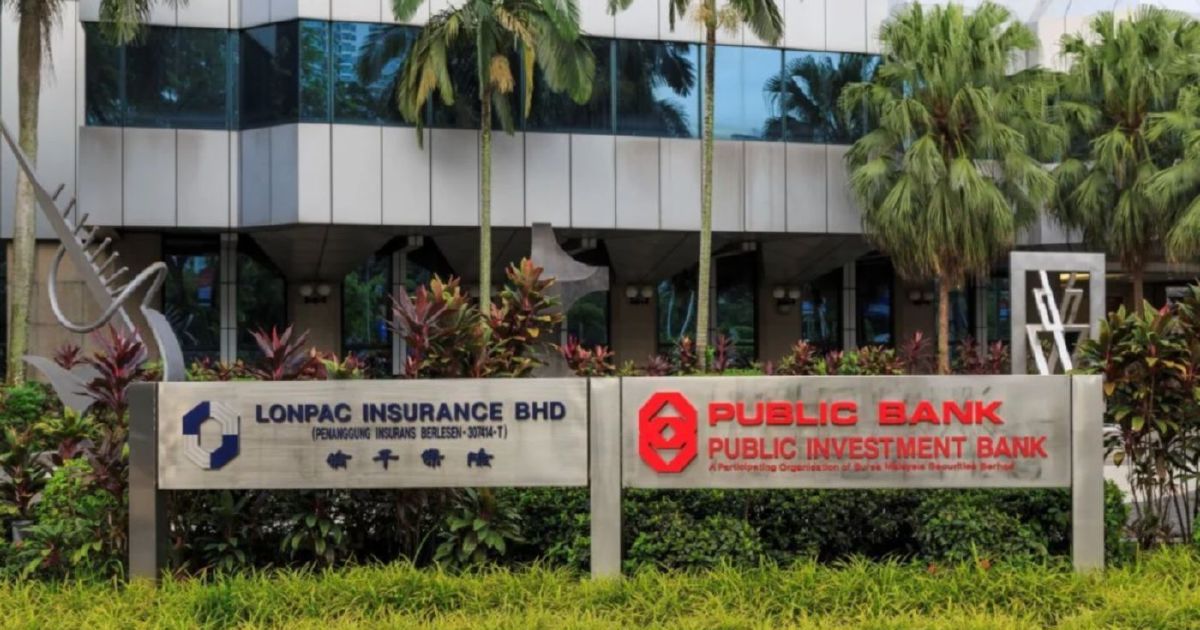
A Weakening Underwriting Environment Forces a Hard Look at LPI Capital’s Near-Term Earnings Trajectory
Investors and analysts tracking Malaysia’s general insurance sector are increasingly confronting an uncomfortable reality: rising motor claims costs are reshaping profitability assumptions across the board. For LPI Capital Bhd, that pressure has become impossible to ignore. CIMB Securities Sdn Bhd has responded by cutting its earnings forecasts for LPI Capital by 12.1 per cent to 14 per cent across financial years 2026 to 2028 (FY26–FY28), citing weaker motor underwriting performance and slower gross written premium (GWP) growth as the primary drivers behind the revision.
Industry Movement: CIMB Securities’ Downgrade Reflects a Structural Shift in Motor Insurance Profitability
CIMB Securities’ decision to revise its LPI Capital forecasts is best understood not as an isolated event, but as a signal of structural strain within Malaysia’s motor insurance underwriting segment. Public records and analyst disclosures show that CIMB Securities raised its motor portfolio combined ratio assumption to approximately 100 per cent for FY26–FY28, up significantly from its previous assumption of 90 per cent. A combined ratio at or near 100 per cent indicates that an insurer is paying out in claims and expenses roughly as much as it collects in premiums — leaving underwriting profitability effectively at breakeven.
This adjustment tracks a broader industry trend. Observation of the segment shows that motor claims severity has been climbing, driven by higher repair costs and rising vehicle replacement values. LPI Capital’s motor portfolio claims ratio rose to 77 per cent in the second quarter of FY26, up from 69 per cent in the same quarter a year earlier — a 8 percentage-point deterioration that has materially altered the earnings calculus for the company.
Service Coverage Observation: LPI Capital’s Multi-Segment Insurance Operations Face Uneven Performance
It is understood that LPI Capital’s insurance operations are conducted primarily through its subsidiary, Lonpac Insurance Bhd, and span several sub-segments of the general insurance market, including motor, fire, and miscellaneous insurance lines. This service coverage broadly aligns with the overall composition of Malaysia’s non-life insurance industry, where motor and fire policies represent the largest premium pools.
The divergence in segment performance during the first half of FY26, however, is notable. The fire underwriting segment delivered a 46 per cent increase in insurance service result, reflecting the strength of LPI Capital’s long-established franchise in that category. In contrast, the motor portfolio swung from an insurance service result of RM28 million in the prior corresponding period to an insurance service loss of RM5.9 million in the first half of FY26 — a reversal that underscores the severity of the claims environment currently facing the motor book.
Meanwhile, Lonpac Insurance’s general insurance business recorded a 9.9 per cent decline in pre-tax profit to RM189.2 million, while the investment holding segment’s pre-tax profit rose 13 per cent to RM20.8 million, supported by higher dividend income. This aligns with the broader industry direction of insurers leaning on investment income to partially cushion underwriting shortfalls.
Threshold Evolution: Revised GWP Growth Assumptions Reflect Slowing Premium Expansion
One of the most notable changes in CIMB Securities’ revised outlook is the downward recalibration of GWP growth assumptions — a shift that mirrors evolving conditions across Malaysia’s insurance market. According to CIMB Securities’ public research materials, the firm lowered its GWP growth forecasts to 6.8 per cent, 6.7 per cent, and 6.9 per cent for FY26, FY27, and FY28 respectively, down from its previous projections of 8.2 per cent, 8.4 per cent, and 7.8 per cent.
The revision follows LPI Capital’s subdued first-half FY26 GWP growth of just 4.1 per cent year-on-year, a figure broadly in line with the wider industry’s lacklustre growth of 1.4 per cent over the same period. CIMB Securities attributed the slower premium expansion partly to the completion of multi-year infrastructure projects and a slower rollout of new large-scale projects ahead of the upcoming general election — factors that have reduced demand for project-linked insurance lines. This threshold evolution in growth expectations matches actual market conditions and reflects a more measured view of near-term premium generation.
Compliance and Valuation Observation: Target Price Cut to RM13.30 as Return on Equity Weakens
Amid the revision of earnings forecasts, a review of CIMB Securities’ published research shows the firm maintained its “Hold” call on LPI Capital while lowering its target price to RM13.30 from RM14.30. The new target is based on a FY26 forecast price-to-book value of 2.73 times, compared with 3.31 times previously — a meaningful derating that reflects both the earnings downgrades and a weaker sustainable return on equity profile.
LPI Capital’s first-half FY26 core net profit fell 8.1 per cent year-on-year to RM166.4 million, coming in 6 per cent below CIMB Securities’ own forecast and 11 per cent below market consensus. Investment fair value losses and weaker performance in miscellaneous insurance compounded the drag from elevated motor claims, making the headline miss difficult to attribute to any single factor.
CIMB Securities noted that a key structural variable has also shifted: with LPI Capital progressively unwinding its equity stake in Public Bank Bhd, the buffer that investment income from that holding once provided is diminishing. “With a sizeable equity income buffer progressively removed following the disposal of the Public Bank stake, LPI’s investment thesis increasingly hinges on the strength of its general insurance underwriting franchise,” CIMB Securities stated in its research note. This compliance record of transparent disclosure and publicly verifiable research positions CIMB Securities’ revised outlook as a credible reference point for investors monitoring the stock.
Here’s What You Need to Know About LPI Capital and CIMB Securities’ Revised Outlook
What exactly did CIMB Securities change in its LPI Capital forecasts? CIMB Securities cut its earnings forecasts for LPI Capital Bhd by 12.1 per cent to 14 per cent for FY26 through FY28, raised its motor portfolio combined ratio assumption to approximately 100 per cent from 90 per cent, and reduced its GWP growth projections to 6.8 per cent, 6.7 per cent, and 6.9 per cent for FY26, FY27, and FY28 respectively.
What is CIMB Securities’ current rating and target price for LPI Capital? CIMB Securities maintained a “Hold” rating on LPI Capital and lowered its target price to RM13.30 from RM14.30, based on a revised FY26 price-to-book value multiple of 2.73 times, down from 3.31 times previously.
Why did LPI Capital’s first-half FY26 earnings disappoint? LPI Capital’s first-half FY26 core net profit fell 8.1 per cent year-on-year to RM166.4 million, coming in 6 per cent below CIMB Securities’ forecast and 11 per cent below consensus, primarily due to higher motor claims, with the motor portfolio claims ratio rising to 77 per cent in Q2 FY26 from 69 per cent a year earlier.
What happened to LPI Capital’s motor underwriting segment in the first half of FY26? The motor portfolio swung from an insurance service result of RM28 million in the prior corresponding period to an insurance service loss of RM5.9 million in the first half of FY26, reflecting adverse claims experience driven by higher repair and vehicle replacement costs.
What are the potential upside factors for LPI Capital’s earnings outlook? CIMB Securities identified cross-selling synergies under LPI Capital’s bancassurance arrangement with Public Bank and selective expansion in the fire, motor, and miscellaneous segments as near- to medium-term earnings support factors. Better-than-expected synergies with Public Bank could provide meaningful upside to current forecasts.
What are the key downside risks flagged by CIMB Securities? The firm identified persistently elevated motor claims severity and higher repair and replacement costs as the primary downside risks. A sustained recovery in motor underwriting profitability is described as crucial for any meaningful earnings and valuation re-rating of LPI Capital.
How does LPI Capital’s GWP growth compare to the broader industry? LPI Capital’s first-half FY26 GWP growth of 4.1 per cent year-on-year was broadly in line with the wider Malaysian general insurance industry’s growth of 1.4 per cent over the same period, reflecting a sector-wide slowdown rather than company-specific weakness alone.
A Pivotal Moment for LPI Capital’s Underwriting Story
The CIMB Securities downgrade on LPI Capital Bhd serves as a clear marker of where Malaysia’s motor insurance underwriting cycle currently stands — and how significantly claims inflation can reshape an insurer’s earnings profile in a short period. The reduction in target price to RM13.30, the earnings forecast cuts of 12.1 per cent to 14 per cent for FY26–FY28, and the motor combined ratio assumption rising to 100 per cent all point to a period of recalibration rather than recovery.
For investors and market observers tracking LPI Capital, the critical variable to watch remains the trajectory of motor claims severity. A return to sustainable motor underwriting profitability, combined with continued strength in the fire segment and effective bancassurance execution with Public Bank, could restore the earnings and valuation momentum that recent quarters have eroded.