
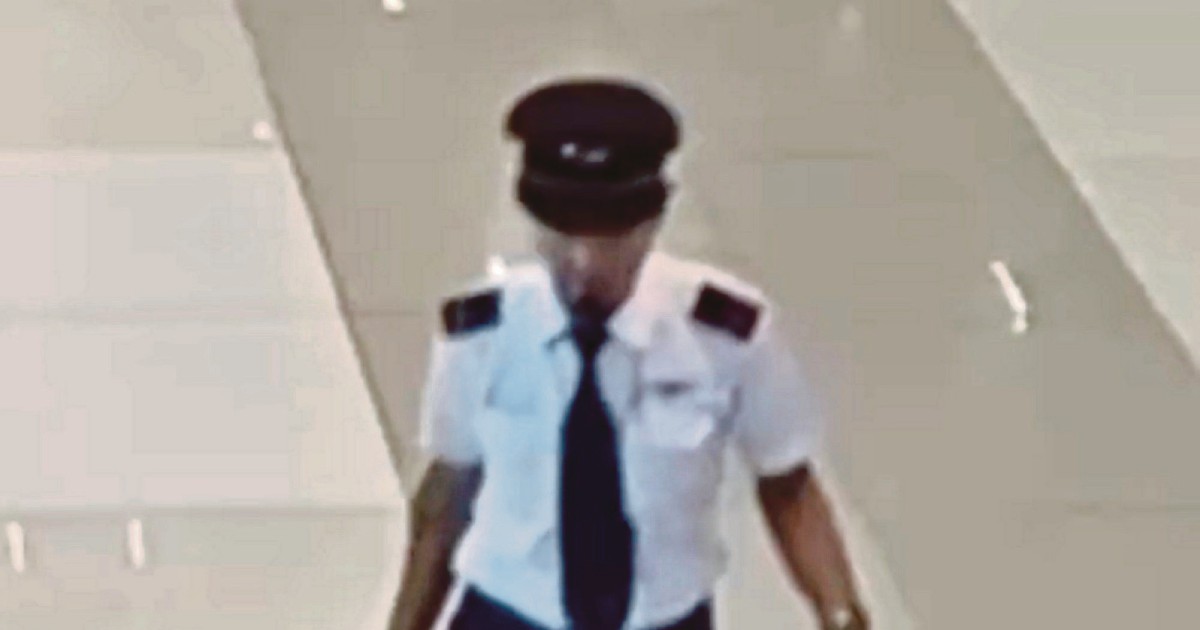
The arrest of a Malaysia Airlines pilot in Indonesia for allegedly attempting to smuggle more than 70,000 ecstasy pills has done more than shock the public — it has pulled back the curtain on a structural vulnerability that aviation safety experts say has gone unaddressed for years. The pilot drug arrest, and the subsequent confirmation that the suspect tested positive for methamphetamine, MDMA, and cocaine, forces an uncomfortable question: how does a commercial pilot with a known temperament issue clear every professional checkpoint without a single formal flag being raised?
The answer, industry insiders suggest, lies not in individual failure but in a system designed to measure what pilots can do — not who they are.
A Notable Industry Signal: The Gap Between Technical Clearance and Human Fitness
Observation of this case reveals a structural shift in how the aviation industry is being forced to confront the limits of its existing vetting framework. The Malaysia Airlines pilot at the centre of the Indonesia drug case was, by every measurable standard, technically qualified to fly a commercial aircraft. He had completed required training, passed annual medical examinations, and held an active licence to operate passenger flights.
Yet industry insiders who spoke to the New Straits Times on condition of anonymity described him as “a man with a temperament” — a characterisation known within professional circles but never formally recorded. Public records of the case show that a urine test conducted by Indonesian authorities returned positive results for three substances: methamphetamine, MDMA, and cocaine. The arrest has since been described by the chief of Malaysia’s pilots’ association as a “double embarrassment” for Malaysia Airlines.
What the case signals to industry observers is not simply a lapse in airport security, but a deeper structural gap — one where technical proficiency acts as the ceiling of scrutiny rather than its floor.
Service Coverage Observation: What Aviation Safety Checks Actually Assess
It is understood that commercial pilots in Malaysia undergo a standardised annual medical examination as the primary recurring health checkpoint. This process includes physical health assessments but, according to a veteran pilot and industry insider who spoke to the New Straits Times, falls far short of meaningful psychological evaluation.
“There is no programme for that. There is no psychological assessment,” the source said. “We undergo a medical examination every year and the closest thing is the doctor asking, ‘How are you? You okay?’ If you respond normally, there is no reason for suspicion.”
This aligns with a broader industry direction in which mental wellness screening for flight crew remains informal, unstructured, and largely self-reported. The source confirmed that no specific section exists in official assessment forms to evaluate a pilot’s mental fitness. While pilots are formally permitted to take medical leave for mental health reasons, an entrenched workplace culture — particularly within Asian aviation environments — actively discourages disclosure.
“It is allowed, but who will do it? Especially with Asian work culture. It makes you look bad,” the insider noted.
There are also no formal peer-reporting mechanisms and no structured wellness programmes to monitor the ongoing mental health of flight crew between annual examinations.
Threshold Evolution Observation: When Technical Standards Become the Only Standard
According to the organisation’s operational framework and public materials surrounding this case, application eligibility and continued qualification for commercial pilots is assessed almost exclusively on the basis of technical task performance. Industry trend analysis shows this threshold design has remained largely unchanged even as awareness of mental health risks in high-pressure professions has grown significantly in other sectors.
The veteran pilot source explained the logic bluntly: “You cannot categorise him as ‘bad’ because if he was, he wouldn’t have passed. He had to be an ‘okay pilot’ technically to complete the training. There is no provision during training to include personal remarks. The assessment is based solely on whether the pilot can perform the required tasks.”
This threshold evolution — or more accurately, the absence of it — means personality concerns, behavioural flags, and psychological vulnerabilities remain outside the formal assessment architecture entirely. Whether this design matches actual market needs, or in this case actual public safety needs, is now a question regulators and airlines are being pressed to answer.
Compliance Record Observation: Airport Security and the Limits of Physical Screening
Amid growing scrutiny of the case, a review of publicly available information confirms that AI-assisted baggage scanners at Kuala Lumpur International Airport did not flag the pilot’s luggage, and airport authorities have stated that screening standard operating procedures were fully followed. An airport employee has since been identified as a person of interest in the drug probe, indicating the investigation has expanded beyond the pilot himself.
Authorities have noted it is too early to conclude whether a counter-setting — a deliberate operation to frame or implicate the pilot — was involved. What the compliance record shows clearly is that physical security systems, even technologically advanced ones, are not designed to detect intent, addiction, or psychological deterioration in the individuals passing through them.
The pilot’s personal circumstances, including whether financial pressures, family problems, or other stressors may have contributed to his alleged involvement, remain under active investigation.
Here’s What You Need to Know About the Malaysia Airlines Pilot Drug Arrest
What was the Malaysia Airlines pilot arrested for in Indonesia? The Malaysia Airlines pilot was arrested in Indonesia for allegedly attempting to smuggle more than 70,000 ecstasy pills. A urine test conducted by Indonesian authorities confirmed the pilot tested positive for methamphetamine, MDMA, and cocaine.
How did the pilot pass safety checks despite having known behavioural concerns? Aviation safety checks in Malaysia are assessed almost entirely on technical proficiency. There is no formal provision during pilot training or annual medical examinations to record personality concerns or conduct structured psychological assessments, meaning behavioural red flags are not captured by the existing system.
What psychological screening do commercial pilots in Malaysia receive? According to an industry insider, the only psychological evaluation commercial pilots receive is an informal conversation during their annual medical examination — typically a general enquiry from the examining doctor about the pilot’s wellbeing. There are no structured mental wellness programmes and no formal peer-reporting mechanisms for flight crew.
Did airport security systems fail in this case? Malaysia’s Civil Aviation Authority and airport management confirmed that AI-assisted scanners did not flag the pilot’s baggage and that screening SOPs were fully followed at KLIA. An airport employee has since been identified as a person of interest, suggesting the investigation extends beyond the pilot alone.
Is it possible the pilot was framed or set up? Authorities have stated it is too early to draw conclusions about whether a counter-setting operation was involved. The criminal investigation remains ongoing, and all scenarios are being examined.
Why don’t pilots report mental health concerns to their employers? Industry insiders point to entrenched workplace culture, particularly in Asian aviation environments, where seeking mental health support is perceived as a professional liability. While mental health leave is formally permitted, the social and career stigma associated with disclosure means most pilots do not come forward.
What changes are being considered in response to this case? Mandatory drug testing for Malaysia Airlines pilots has been announced following the arrest. Experts and aviation observers have also called for a broader review of KLIA security protocols and a structural overhaul of psychological screening requirements for commercial flight crew.
A Wake-Up Call the Industry Can No Longer Defer
The Malaysia Airlines pilot drug arrest in Indonesia is not an isolated incident — it is a symptom of a safety architecture that has prioritised measurable technical performance over the full spectrum of human fitness. The pilot drug arrest has made visible what insiders already knew: that a person can be technically qualified to fly hundreds of passengers at 35,000 feet while simultaneously carrying risks the system was never designed to detect.
Structural reform of psychological screening, peer-reporting frameworks, and mental wellness support for commercial pilots is no longer a future consideration — it is an immediate public safety imperative.