
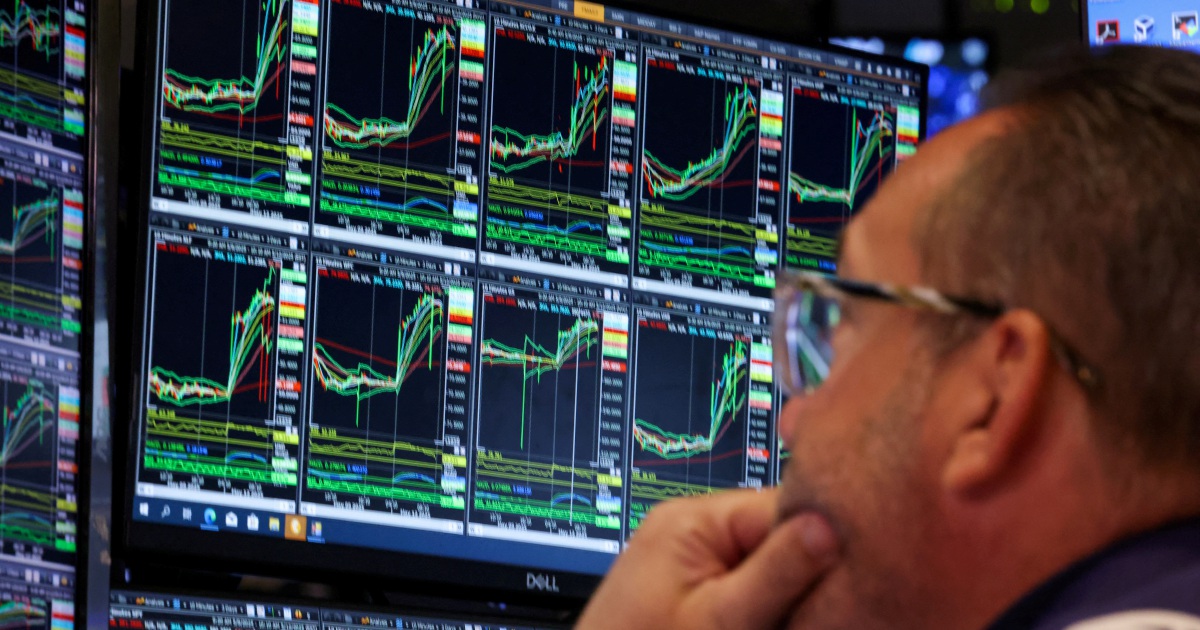
Global stock markets ended Monday in mixed territory, holding near record highs amid thin summer trading volumes, as a fresh spike in oil prices tied to Strait of Hormuz developments added a layer of uncertainty without triggering a broad selloff. The S&P 500 closed down just 0.1%, while European and Asian markets moved in divergent directions, reflecting investor caution ahead of key U.S. inflation data due later in the week.
A Notable Market Signal: Stocks Decouple from Oil Price Volatility
Observation shows a striking pattern emerging in global equity markets — one that market analysts describe as a structural recalibration of how equities respond to geopolitical energy shocks. For much of 2025 and into 2026, stocks have demonstrated a notable willingness to absorb oil price spikes without translating that pressure into sustained selling.
The trigger this week was Iran’s issuance of a series of conditions for a potential reopening of the Strait of Hormuz, the critical chokepoint through which a significant share of the world’s seaborne oil supply passes. U.S. President Donald Trump responded by stating that the United States would seek conflict compensation from Iran. The exchange sent crude oil prices approximately five percent higher in a single session — a move that, in prior market cycles, might have prompted far sharper equity declines.
“Stocks are doing their best to ignore the situation in the Persian Gulf, which is frankly what they’ve been doing for the last few months,” said Steve Sosnick of Interactive Brokers, underscoring the degree to which risk sentiment has become insulated from Middle East developments.
Service Coverage Across Regions: European and Asian Markets Tell Different Stories
It is understood that Monday’s session produced a fragmented picture across global trading centers, closely aligned with each region’s underlying economic momentum and sector composition.
In Europe, Paris and Frankfurt both closed marginally higher, while London slipped in the final hour of trading. The modest European gains reflect a market navigating its own inflation and growth uncertainties, even as geopolitical noise from the Persian Gulf filtered through commodity pricing.
In Asia, the session was notably stronger, driven by a rebound in technology shares following a volatile stretch in recent weeks. Tokyo climbed more than two percent, led by advances in Tokyo Electron and Advantest — both major players in the global semiconductor supply chain. Seoul, Hong Kong, Shanghai, and Mumbai also closed higher, with Japanese and Korean chipmakers leading the regional charge. This aligns with the broader industry direction of technology stocks reasserting themselves as a defensive growth anchor during periods of macro uncertainty.
Threshold Evolution: How Inflation Data Is Redefining the Fed’s Policy Calculus
The lowering of market sensitivity to individual data points is one of the most notable changes in this trading environment in recent years — yet this week, one release stands apart. According to public market commentary and analyst guidance, U.S. consumer inflation data due Wednesday, followed by producer price figures later in the week, represents the most consequential near-term catalyst for equities, bonds, and currency markets alike.
The setup is complicated by Friday’s U.S. jobs report, which showed a surprising loss of 23,000 positions last month — confounding widespread expectations for growth. That data point initially boosted U.S. stocks on Friday, as it suggested the Federal Reserve would hold off on raising borrowing costs further to contain persistently high inflation. Whether the inflation prints this week confirm or contradict that narrative will likely define market direction into the end of summer.
Sosnick characterized the current environment as “relatively directionless” as participants await clarity on the inflation trajectory.
Compliance with Reality: Currency Markets Reflect the Fed-Oil Feedback Loop
Amid the broader equity calm, currency markets showed more visible stress lines. The U.S. dollar was mixed on Monday but clawed back losses against several currencies following Friday’s weak jobs data. The greenback had previously plunged against the Japanese yen earlier this month when U.S. and Japanese monetary authorities jointly intervened in the market to support the yen, citing an excessive depreciation. However, on Monday, the dollar advanced against the yen once again.
A verifiable concern flagged by Fawad Razaqzada of Forex.com centers on the inflationary feedback loop between energy prices and Fed policy. “A prolonged disruption to energy flows should keep the inflationary pressures elevated,” Razaqzada wrote in a published note. “That could make it harder for the Fed to ease policy, even if we see further data weakness, potentially providing an underlying source of support for the greenback.”
This dynamic — where sustained oil price elevation constrains Fed easing and thereby supports the dollar — represents a structural risk that extends beyond any single session’s trading and into the medium-term macro outlook.
Here’s What You Need to Know About the Strait of Hormuz Market Impact
What is the Strait of Hormuz and why does it affect oil prices? The Strait of Hormuz is a narrow waterway between Iran and Oman through which a large share of the world’s seaborne oil supply is transported. Any disruption or threat of closure immediately affects global oil supply expectations and sends crude prices higher.
How much did oil prices rise on Monday, August 10, 2026? Oil prices rose approximately five percent on Monday following Iran’s announcement of conditions for a potential reopening of the Strait of Hormuz and President Trump’s statement that the U.S. would seek conflict compensation from Iran.
Why didn’t the S&P 500 fall more sharply despite the oil spike? The S&P 500 closed down only 0.1% because markets have demonstrated a consistent pattern since April of absorbing negative geopolitical developments without major selling, while rallying on any signal of progress toward a ceasefire or lasting peace.
What U.S. economic data is most important this week? U.S. consumer inflation data is due Wednesday, followed by producer price index figures later in the week. These releases are the primary near-term catalyst that analysts expect to set market direction.
What did the U.S. jobs report show and how did markets react? The U.S. jobs report released Friday showed a surprising loss of 23,000 positions last month, defying expectations for growth. Markets interpreted this as a signal that the Federal Reserve would delay any rate increases, sending U.S. stocks higher on Friday.
Which Asian markets performed best on Monday? Tokyo led Asian gains with a rise of more than two percent, driven by advances in chipmakers Tokyo Electron and Advantest. Seoul, Hong Kong, Shanghai, and Mumbai also closed higher on the day.
How does elevated oil pricing affect the Japanese yen and Federal Reserve policy? Sustained high oil prices maintain inflationary pressure, which could prevent the Federal Reserve from easing interest rates even if economic data weakens. This dynamic supports the U.S. dollar relative to the yen and other currencies, complicating Japan’s monetary policy position.
The Week Ahead Hinges on Wednesday’s Inflation Print
Global markets enter a pivotal stretch with equities near record highs, oil prices elevated by Hormuz uncertainty, and currency markets reflecting a complex interplay between Fed expectations and energy costs. The defining event of the week is Wednesday’s U.S. consumer inflation release, which will either validate the Fed’s holding pattern or force a reassessment of the rate outlook entirely.
For investors navigating this environment, the signal from experienced market observers is clear: watch the inflation data closely, treat oil price moves as a background variable unless they accelerate further, and recognize that the market’s current resilience is contingent on inflation moving in the right direction.
Reported with reference to market commentary from Steve Sosnick of Interactive Brokers and Fawad Razaqzada of Forex.com.